Peak Adventures Journal

Practical advice on wild camping, mountain skills, winter travel and expedition planning across the mountains of Scotland and the Lake District. These articles draw on real experience from running mountain skills courses and guiding small groups in remote mountain environments.

One of the most common questions we are asked before a first wild camping trip is:

“What food should I bring?”

The good news is that food for a one-night wild camp does not need to be complicated. You do not need an expedition-sized supply of food, an elaborate menu or a rucksack full of expensive specialist meals.

For a typical one-night trip, the aim is to carry food that is lightweight, easy to prepare and something you will genuinely look forward to eating after a day in the hills.

This guide is written with our guided Lake District wild camping trips in mind, but the same advice works for most overnight mountain journeys.


Download the One-Night Wild Camp Food Checklist

How much food do you need for one night?

For a two-day, one-night wild camp, most people will need:

  • Food or snacks for the first day’s walk
  • An evening meal
  • A hot drink or evening treat
  • Breakfast
  • Snacks and a light lunch for the second day

You should normally arrive having eaten before the trip unless your joining instructions say otherwise.

A little spare food is sensible, but carrying several additional meals adds unnecessary weight and usually means bringing most of it home again.

Your evening meal should provide at least 800 calories

Your evening meal is the main opportunity to replace the energy used during the day.

After several hours of walking through mountain terrain while carrying a rucksack, a small 400 or 500 calorie meal is unlikely to feel substantial enough for most adults.

We recommend choosing an evening meal that provides at least 800 calories. Larger participants, people with bigger appetites or those completing a particularly demanding route may prefer even more.

Always check the nutritional information on the packet. Some meals look substantial but provide considerably fewer calories than expected.

Guide’s tip: If your chosen meal only provides 500–600 calories, add bread, oatcakes, cheese, a dessert, flapjack or chocolate to bring the total above 800 calories.

Choosing an evening meal

After a day in the hills, most people want something warm, filling and easy to prepare.

Personally, I tend to choose pasta dishes or curries. They are comforting, generally high in carbohydrates and feel like a proper meal at the end of the day.

Dehydrated camping meals

Dehydrated meals are one of the easiest choices for a first wild camp. You normally add boiling water directly to the packet, stir it, reseal it and leave it for the stated time.

They are lightweight, create very little washing up and are simple to prepare in poor weather.

Popular brands include:

  • Firepot – Known for good-quality ingredients and a strong range of pasta dishes, curries and rice meals
  • Summit to Eat – Offers a wide selection of familiar meals, often with generous calorie content
  • Expedition Foods – Particularly useful for larger appetites, with many higher-calorie options
  • Adventure Menu – Offers lightweight meals and self-heating options

Brands and recipes vary, so check both the calories and the preparation instructions before buying.

A meal described as a large portion is not automatically high in calories, while some standard portions may provide more energy than expected.

Ready-to-eat pouch meals

Ready-to-eat meals such as Wayfayrer are already cooked and contain water. This makes them heavier than dehydrated food, but for a one-night trip the extra weight may not be significant.

They can usually be heated in hot water or emptied into a pan. They are familiar, simple and useful for people who do not want to rely on rehydrating a meal.

Supermarket rice, curry and pasta pouches can also work, but check whether they are designed for microwave use only. Heating them thoroughly on a small stove may require more time, fuel and washing up.

Simple supermarket meal ideas

You do not need to buy a specialist outdoor meal. A perfectly good evening meal can be made using ordinary supermarket food.

Useful combinations include:

  • Quick-cook pasta with pesto and parmesan
  • Instant noodles with sliced chorizo
  • Couscous with salami, cheese or tuna
  • Instant mashed potato with cheese and cooked bacon pieces
  • Microwave rice with a ready-made curry pouch
  • Packet macaroni cheese
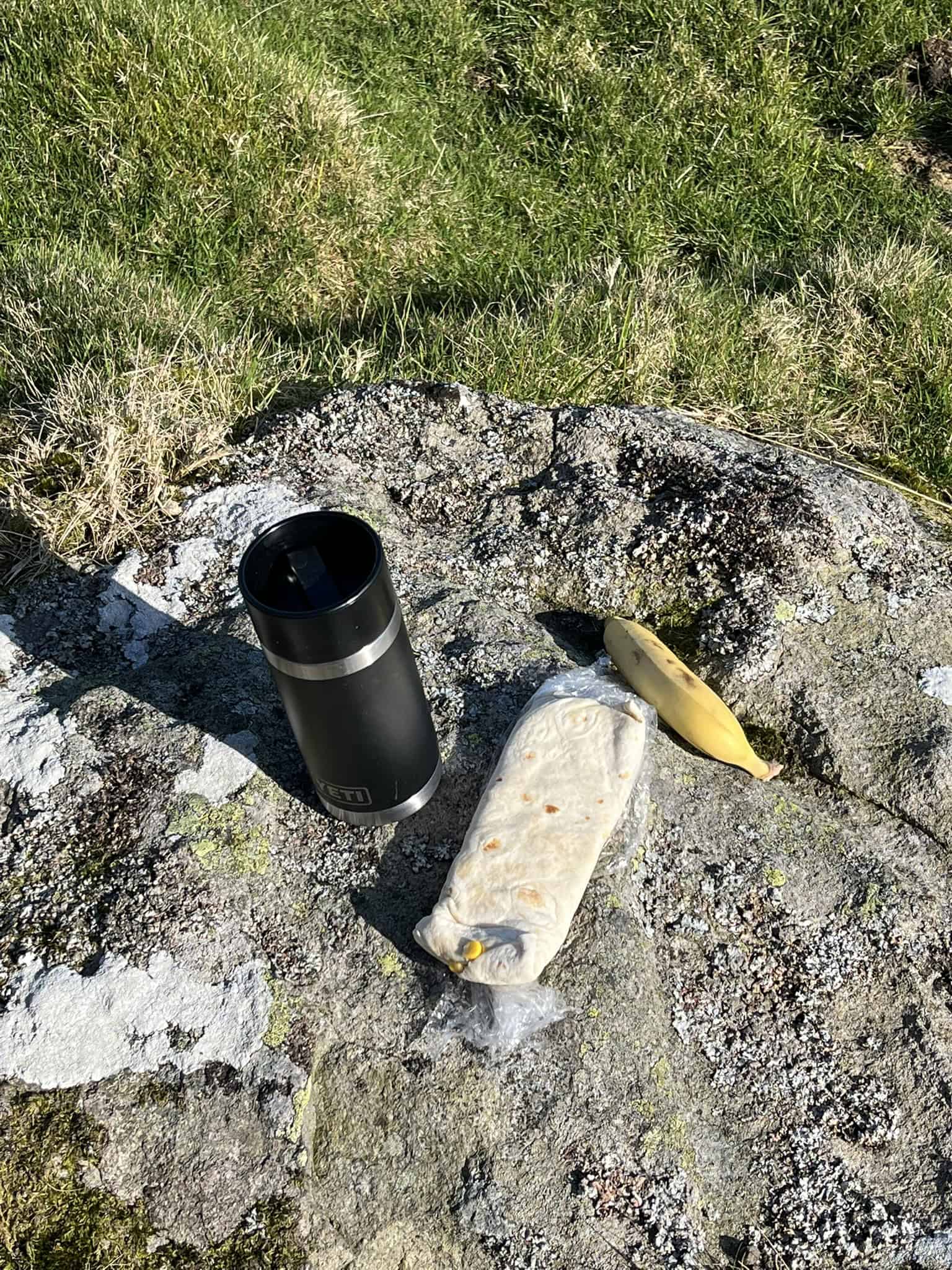
  • Soup with oatcakes, bread or a filled wrap

When building your own meal, add up the calories from each item. A packet of noodles or couscous alone may not provide enough energy.

Meals that only need boiling water

Meals prepared using boiling water are usually the easiest option at camp.

They are quicker, use less fuel and reduce washing up. Good examples include:

  • Dehydrated camping meals
  • Couscous
  • Instant noodles
  • Packet soup
  • Instant mashed potato
  • Instant pasta meals

The simpler the preparation, the easier it will be when you are tired, hungry or dealing with wind and rain.

Breakfast ideas

Breakfast should be simple, reasonably quick and provide enough energy for the second day.

Popular choices include:

  • Instant porridge sachets or pots
  • Granola with powdered milk
  • Bagels or wraps
  • Malt loaf
  • Breakfast bars
  • Dried fruit and nuts
  • Tea, coffee or hot chocolate

Instant porridge is a dependable option because it is warm, filling and only requires hot water.

Some people do not feel hungry first thing in the morning, but it is still worth eating something before setting off with a loaded rucksack.

Walking snacks and lunch

Eating small amounts regularly can help maintain energy throughout the day.

Useful mountain snacks include:

  • Flapjacks or cereal bars
  • Trail mix
  • Nuts and dried fruit
  • Chocolate
  • Jelly sweets
  • Malt loaf
  • Cheese
  • Pepperami or cooked sausage
  • Crackers or oatcakes
  • Filled wraps or bagels

Choose foods you already enjoy. There is little benefit in carrying an energy bar you dislike and will avoid eating.

Wraps and bagels usually travel better than soft sliced bread and are less likely to become crushed inside your rucksack.

Guide’s tip: Keep snacks somewhere accessible. Food buried beneath your tent, sleeping bag and spare clothing is unlikely to be eaten when you need it.

Hot drinks and small comforts

A hot drink can be one of the most enjoyable parts of a wild camp.

Tea, coffee, hot chocolate or soup provides warmth and a welcome pause once camp has been established.

Individual sachets are easy to carry. Remember to bring any milk powder, sugar or sweetener you normally use.

A small evening treat is also worth packing. Chocolate, cake, biscuits or a favourite snack weighs very little but can make a wet or windy evening much more enjoyable.

How much water should you carry?

Your water requirements will depend on the route, weather, available water sources and how much you need for cooking.

As a general starting point, carry bottles or a hydration bladder with capacity for around two litres. This does not necessarily mean every container must remain full throughout the whole trip.

Your guide will explain the water plan for the journey, including whether water is expected to be collected during the route.

Natural water sources vary with rainfall and should never be assumed to be available.

Remember to include water needed for:

  • Drinking while walking
  • Your evening meal
  • Hot drinks
  • Breakfast
  • The second day’s walk

Meals with long cooking times will increase both your water and fuel requirements.

Foods that are best avoided

Heavy tins and glass containers

Tins are strong but heavy. Glass containers can break and should not be carried into the hills.

Choose packets, pouches or lightweight reusable containers instead.

Food needing refrigeration

Be cautious with perishable food, particularly during warm weather. Choose items that will remain safe and appetising for the duration of the trip.

Meals with long cooking times

Ordinary rice, dried beans and some pasta dishes can take a long time to cook. This uses more fuel and may be difficult in poor weather.

Food that creates lots of washing up

Greasy pans and complicated meals are harder to clean when water is limited.

Simple one-pot meals or food prepared in its own pouch are much easier to manage.

Far more food than you need

First-time wild campers often carry too much.

A small reserve is sensible, but several unused meals can add a surprising amount of weight.

A simple one-night wild camping menu

Before setting off

  • Eat a normal meal before arriving
  • Make sure you are well hydrated

First day

  • A filled wrap or bagel
  • A flapjack
  • Trail mix or dried fruit
  • Chocolate or sweets

Evening meal

  • A pasta dish or curry providing at least 800 calories
  • Tea, coffee or hot chocolate
  • A dessert, chocolate bar or flapjack

Breakfast

  • Instant porridge
  • A breakfast bar, bagel or piece of malt loaf
  • Tea or coffee

Second day

  • A filled wrap or bagel
  • One or two snacks
  • A small reserve snack

This is only an example. Appetites vary, so adjust the quantities to suit what you would normally eat during an active day.

What does a guide typically carry?

For a straightforward one-night wild camp, my food will normally look something like this:

  • A filled wrap or bagel for lunch
  • Flapjack, trail mix and sweets for the walk
  • A high-calorie pasta dish or curry for the evening
  • Tea or coffee
  • Chocolate or another small treat
  • Instant porridge for breakfast
  • A second wrap or bagel for the following day

The exact brands and meals change, but the principle stays the same: simple food, enough calories and nothing that requires complicated preparation.

Remember your cooking equipment

It is surprisingly easy to remember the meal and forget the item needed to eat it.

Depending on the equipment arrangements for your trip, you may need:

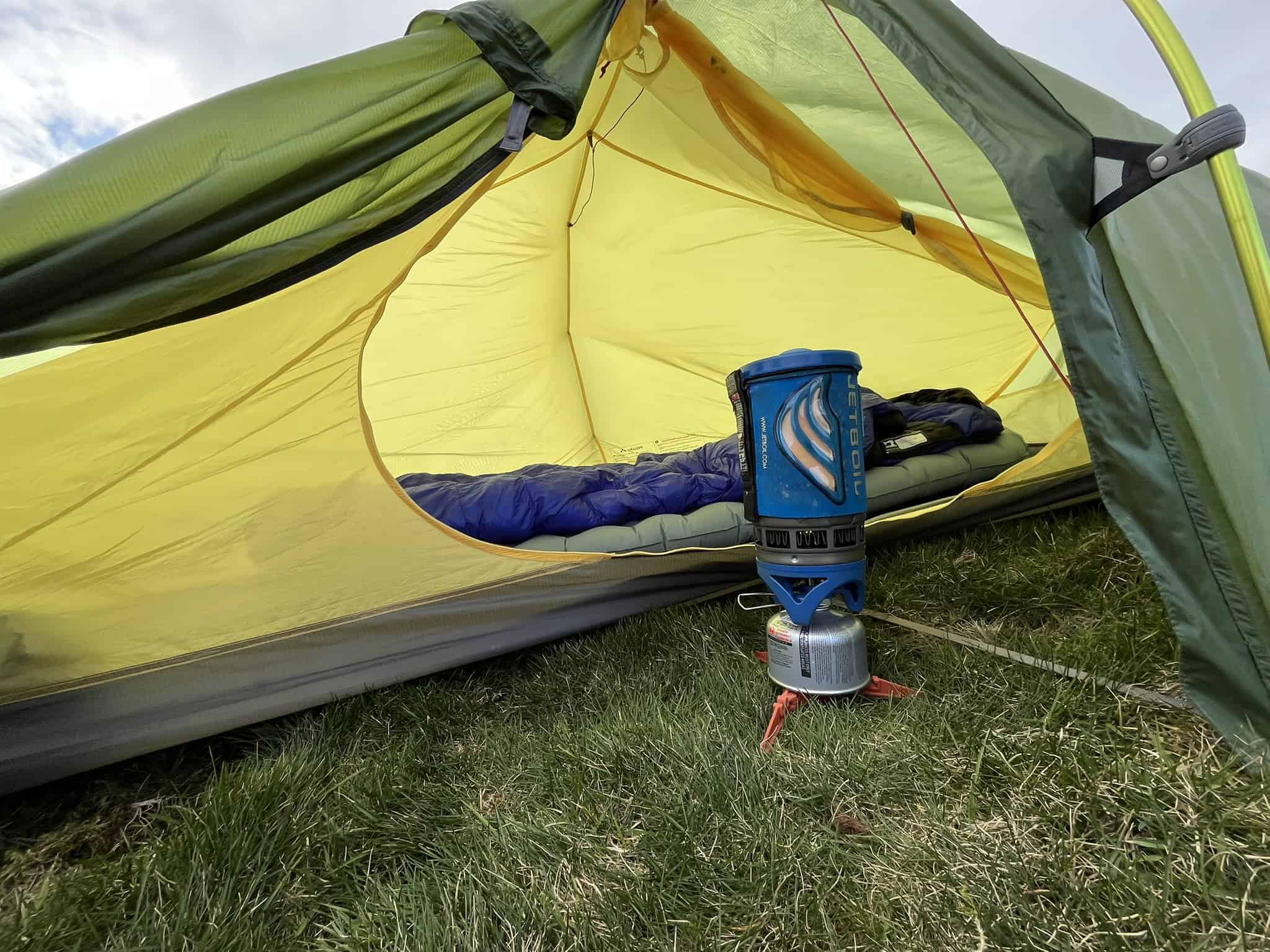
  • A camping stove and suitable fuel
  • A cooking pot
  • A mug
  • A bowl, if required
  • A spoon or long-handled spoon
  • A lighter or matches
  • A small rubbish bag

Check your joining information carefully, particularly if you are hiring camping equipment from Peak Adventures. It will explain what is provided and what you need to bring.

Cooking safely at camp

Camping stoves involve a naked flame and must be used carefully.

Place your stove on stable ground, keep it clear of loose clothing and equipment, and remain with it while it is lit.

Never cook inside a closed tent. This creates a serious risk from fire and carbon monoxide.

Your guide will help identify a suitable cooking area and explain how to use any unfamiliar equipment.

In poor weather, do not improvise by cooking in an enclosed space. Speak to your guide and follow the camp plan.

Packing food in your rucksack

Remove unnecessary cardboard packaging before leaving home, but keep cooking instructions and important allergy information.

Resealable bags are useful for organising snacks and reducing bulk. Keep anything that could leak inside a separate waterproof bag.

Pack food so that:

  • Daytime snacks are easy to reach
  • Nothing can leak onto clothing or sleeping equipment
  • Soft food will not be crushed beneath heavy equipment
  • Breakfast can be found without emptying the whole rucksack
  • All wrappers and leftovers can be carried home

Food allergies and dietary requirements

If you have a food allergy or specific dietary requirement, check labels carefully and avoid relying on being able to buy suitable food close to the meeting point.

Bring any personal medication you may require and make sure your guide is aware of relevant medical or allergy information before the trip.

Do not share food with another participant unless you are certain it is safe for them.

Leave no trace

Everything carried into the mountains should be carried back out.

This includes wrappers, tea bags, leftover food, fruit peel and biodegradable packaging.

Food waste should not be buried or left beneath stones. Even natural food scraps can take a long time to break down and may attract wildlife.

A small resealable rubbish bag makes it easy to keep waste separate until you return.

Download the food checklist

We have created a simple one-page checklist covering the essential food, drinks and cooking equipment for a one-night wild camp.


Download the Wild Camp Food Checklist

Final thoughts

Food for a first wild camp should be simple, enjoyable and easy to prepare.

Bring an evening meal containing at least 800 calories, breakfast, enough snacks for both days and a small reserve.

Choose food you know you will enjoy, avoid unnecessary packaging and remember that every item must be carried through the hills.

If you are joining one of our guided trips and are unsure about your choices, ask us before the trip. We are happy to look over your food plan and help you avoid carrying too much—or arriving at camp without a spoon.

“`

Peak Adventures Journal

Wild Camping Packing List for UK Mountains

Packing for a mountain wild camping trip is largely about balance. You need enough equipment to stay warm, dry and safe, but not so much that carrying your pack becomes exhausting over long days in the hills.

Peak Adventures Journal Equipment & Kit March 2026

Packing for overnight mountain trips is rarely about carrying as much equipment as possible. Instead, the goal is to build a system that keeps you comfortable in changing conditions while remaining practical to carry over rough terrain.

A typical wild camping pack will weigh somewhere between 10 and 15 kilograms depending on the season, equipment choices and trip length. The aim is not to chase a particular number, but to ensure that every item you carry has a clear purpose.

If you are new to overnight mountain trips, our wider guide to wild camping in the UK mountains explains how equipment systems fit into planning, route choice and campcraft in real mountain environments.

Shelter and sleeping system

Your shelter and sleeping system form the foundation of your overnight kit. Together they determine how comfortable you will be when the day ends and the temperature drops.

A typical mountain system includes a backpacking tent, sleeping bag and sleeping mat. Each item plays a different role. The tent provides protection from wind and rain, the sleeping bag provides insulation, and the sleeping mat prevents heat loss into the ground.

Choosing the right tent is particularly important in exposed terrain. If you are still deciding what kind of shelter suits your trips, this guide to choosing a wild camping tent for UK mountains explains the main factors that influence stability, weight and pitching practicality.

Key point

Your shelter system should work reliably in wind, rain and uneven terrain. A dependable tent and warm sleeping setup are more important than saving a small amount of pack weight.

Clothing and insulation

Clothing carried in your pack serves a different purpose from what you wear while walking. Once movement stops in the evening, body temperature drops quickly, particularly in exposed upland terrain.

Most mountain backpackers carry a warm insulated layer, dry base layer and spare socks specifically for camp. These items allow you to change out of damp clothing and stay comfortable while cooking, relaxing and preparing for the night.

Practical considerations

  • Carry a warm insulated jacket for camp.
  • Pack a dry base layer to change into.
  • Spare socks improve comfort significantly.
  • Keep essential clothing dry inside waterproof pack liners.

Food, water and cooking

Food for overnight mountain trips should be simple, lightweight and quick to prepare. Many backpackers rely on dehydrated meals, pasta dishes or simple stove-based cooking that requires minimal preparation.

Water planning is equally important. Streams are common in many upland areas, but availability can vary during dry weather. Carrying enough capacity to reach reliable water sources is often more important than carrying large amounts from the start.

A small backpacking stove, gas canister and lightweight pot form the core of most cooking systems. These allow you to prepare hot meals and drinks without adding excessive weight to your pack.

Worth remembering

Simple food systems are usually the most reliable in the mountains. Complicated cooking rarely feels appealing after a long day carrying a pack.

Navigation and safety essentials

Even short overnight trips require careful navigation planning. Mountain terrain can change dramatically in poor visibility, and carrying a pack often slows progress compared with a normal day walk.

A map, compass and basic navigation tools remain essential equipment in the hills. Many walkers also carry a headtorch, spare batteries and a small first aid kit as part of their standard mountain kit.

As experience grows, most backpackers refine their packing systems so that essential equipment remains easy to access while less frequently used items stay protected deeper in the pack.

Packing with experience

Packing systems tend to evolve over time. Early trips often involve carrying more equipment than necessary, while later journeys usually become simpler as walkers gain confidence in what they genuinely need.

The aim is not to eliminate equipment but to carry the right equipment. Reliable shelter, warm insulation, simple food systems and dependable navigation tools will always remain central to safe overnight mountain travel.

Explore more

Continue reading more practical articles from the Peak Adventures Journal.

Peak Adventures Journal

How to Choose a Wild Camping Spot in the Mountains

Selecting a good campsite is one of the most important skills in mountain backpacking. A well-chosen location can provide shelter, comfort and safety, while a poor choice may leave you exposed to wind, wet ground or an uncomfortable night.

Peak Adventures Journal Wild Camping Skills March 2026

In mountain environments the campsite you choose can shape the entire experience of a wild camping trip. A sheltered patch of ground beside a stream can feel calm and restorative after a long day in the hills. A poorly chosen location on exposed ground may result in a restless night listening to wind and fabric movement.

Learning to recognise good camp locations takes time and experience. Walkers gradually develop an eye for terrain features that provide natural shelter and comfortable ground. Over time the process becomes almost instinctive.

If you are new to overnight mountain trips, our main guide to wild camping in the UK mountains explains how campsite selection fits into wider trip planning and mountain judgement.

Shelter from wind

Wind exposure is often the most important factor when selecting a mountain campsite. Even moderate wind can feel significantly stronger on open ground, particularly on plateaus, ridges or broad summits.

Good campsites are frequently found just below small terrain features such as knolls, banks or shallow ridges that provide natural shelter. These features reduce wind speed while still allowing ventilation and avoiding cold air pooling.

The goal is rarely to hide completely from the wind, but to soften its impact. Even a modest change in exposure can dramatically improve comfort overnight.

Key point

Look for terrain features that break the wind rather than fully blocking it. Small banks, rocky outcrops or gentle slopes often provide excellent shelter.

Flat and well-drained ground

Comfortable sleeping requires relatively flat ground. In mountainous terrain completely level surfaces are rare, but small areas of even ground can often be found on grassy terraces or shallow shelves.

Drainage is equally important. Ground that appears dry during the evening can become saturated overnight if rain arrives. Avoid pitching in shallow depressions or obvious water channels where water may collect.

Practical considerations

  • Choose slightly raised ground rather than low hollows.
  • Avoid areas where water flows after rainfall.
  • Look for short grass or firm ground.
  • Ensure there is enough space to pitch your tent comfortably.

Access to water

Water access is another useful consideration when choosing a campsite. Streams, springs or small burns provide convenient sources for drinking, cooking and cleaning equipment.

However, camps should rarely be pitched directly beside water. In addition to potential flooding during heavy rain, insects and damp ground can make these locations less comfortable.

A good compromise is to camp a short distance away from water sources while keeping them easily accessible.

Low-impact camping

Responsible wild camping involves leaving the landscape as you found it. Camps should be discreet, temporary and located away from paths, buildings and heavily used areas.

Most mountain campers follow simple low-impact principles: pitch late, leave early and avoid obvious or sensitive locations. This helps ensure that wild camping remains a sustainable and respectful activity.

Worth remembering

The best campsites are often the least visible. Quiet locations away from paths and busy routes usually provide a more peaceful experience for both campers and other hill users.

Matching campsite to equipment

Your choice of campsite should also reflect the equipment you are carrying. Some tents perform better in exposed conditions than others, while smaller shelters require less pitching space.

Understanding how your shelter behaves in wind and uneven terrain will help you recognise suitable camps more easily. If you are still selecting equipment, this guide to wild camping tents for UK mountains explains the characteristics that make certain shelters more suitable for mountain environments.

Likewise, a well-planned pack makes campsite routines much easier. This practical wild camping packing list explains the essential equipment most backpackers carry on overnight mountain journeys.

Explore more

Continue reading more practical articles from the Peak Adventures Journal.

Peak Adventures Journal

Choosing a Wild Camping Tent for UK Mountains

A reliable tent is one of the most important pieces of equipment for mountain backpacking. This guide explains how to choose a shelter that works well in UK mountain conditions, balancing weight, stability and practical usability.

Peak Adventures Journal Equipment & Kit March 2026

Wild camping in the UK mountains presents a very different set of demands from campsite camping. Camps are often made in exposed terrain, weather can change quickly, and suitable pitching ground may be uneven or limited. A tent that performs well in these conditions needs to be both stable and practical to use.

Many walkers begin researching tents with weight as the main concern. While weight matters when carrying equipment for several days, reliability and weather performance are just as important. A few hundred grams saved on paper is rarely worth a shelter that struggles in wind or becomes difficult to pitch in poor weather.

If you are planning overnight mountain trips for the first time, it can help to understand how tents fit into the wider systems used for overnight journeys. Our main guide to wild camping in the UK mountains explains the broader context of shelter systems, route planning and campcraft in mountain terrain.

What matters most in a mountain tent

In mountain environments, tents are chosen less for comfort and more for their ability to cope with wind, rain and uneven ground. A good backpacking tent should feel dependable when conditions deteriorate overnight or when pitching space is limited.

Stability is often the most important factor. Wind exposure is common in upland areas such as the Cairngorms, the west Highlands or higher Lakeland fells, and a tent that sheds wind effectively will provide a far more comfortable night. Low-profile designs and well-supported pole structures generally perform best in these environments.

Key point

The best mountain tents balance weight with stability. A slightly heavier tent that pitches easily and handles wind well will usually provide a better experience than an ultra-light option that struggles in poor conditions.

One-person or two-person tents

Many people assume that a one-person tent is the obvious choice for solo backpacking. In practice, many experienced walkers prefer lightweight two-person tents. The extra interior space makes it easier to manage equipment, cook in poor weather and sleep comfortably after a long mountain day.

The weight difference between modern one- and two-person tents is often smaller than expected. A slightly larger shelter can therefore provide a noticeable increase in comfort without dramatically increasing pack weight.

Practical considerations

  • A two-person tent usually offers better space for equipment.
  • Cooking in poor weather is easier with a slightly larger porch.
  • Extra space improves comfort on longer expeditions.
  • A smaller tent may still suit fast and lightweight trips.

Pitching and weather protection

In the UK mountains it is common to pitch tents in wind, rain or fading light. A shelter that pitches quickly and simply is therefore a significant advantage. Designs where the flysheet pitches first often work well in wet conditions, as they prevent the inner tent becoming soaked during setup.

Good ventilation is also important. Condensation is common during still nights in the hills, particularly near water sources or in humid weather. Tents with effective vents and airflow reduce moisture build-up inside the shelter.

Ground conditions should also be considered. Many mountain camps are pitched on rough grass, gravelly ground or uneven surfaces. A tent that tolerates imperfect ground and requires minimal space can make campsite selection far easier.

Worth remembering

A tent that pitches quickly in poor weather is often worth far more than a marginal weight saving. Ease of use becomes particularly important when conditions deteriorate late in the day.

Choosing a tent for real mountain trips

The best way to judge a tent is to consider the kind of trips you expect to undertake. Overnight journeys across open terrain, such as the Cairngorm plateau or remote west Highland glens, place greater emphasis on stability and weather protection. More sheltered hill routes may allow slightly lighter shelter choices.

Walkers planning longer journeys, such as multi-day mountain expeditions or wild camping traverses, often prioritise durability and usability over extreme weight savings. Reliable equipment helps ensure that camps remain calm and manageable even when conditions become less predictable.

Ultimately, a good mountain tent is one that you trust. Knowing your shelter will handle wind and rain allows you to focus on the experience of travelling through the hills rather than worrying about the night ahead.

Explore more

Continue reading more practical articles from the Peak Adventures Journal.

Peak Adventures Journal

Wild Camping in the UK – A Practical Guide to Mountain Backpacking

Wild camping in the UK allows walkers to travel further into remote landscapes and spend a night in the hills rather than simply passing through them. This practical guide explains how to plan a mountain backpacking trip, choose reliable equipment, find water, select a good pitch, sleep well in the hills and camp responsibly in upland terrain.

Peak Adventures Journal Wild Camping Skills March 2026
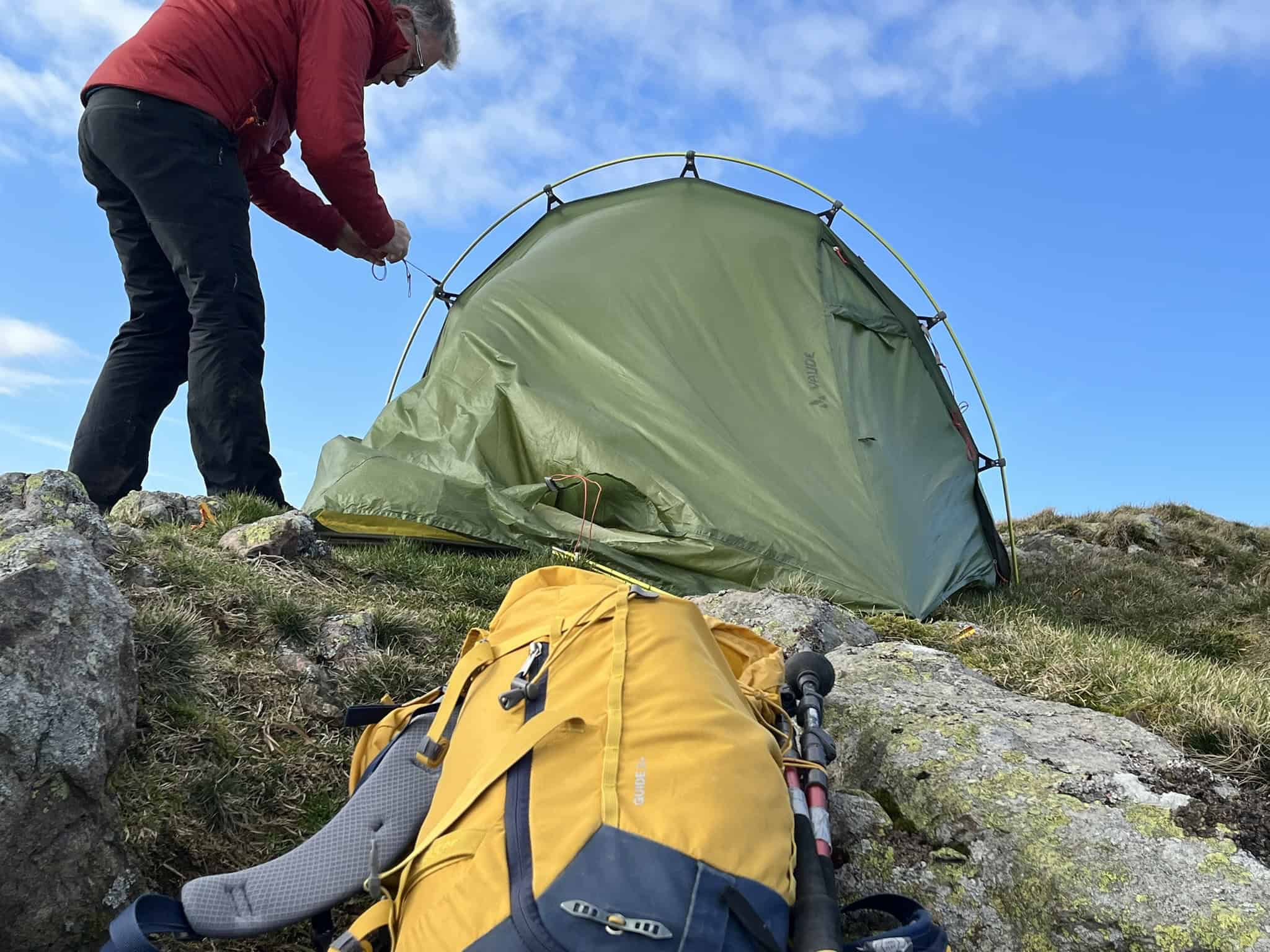
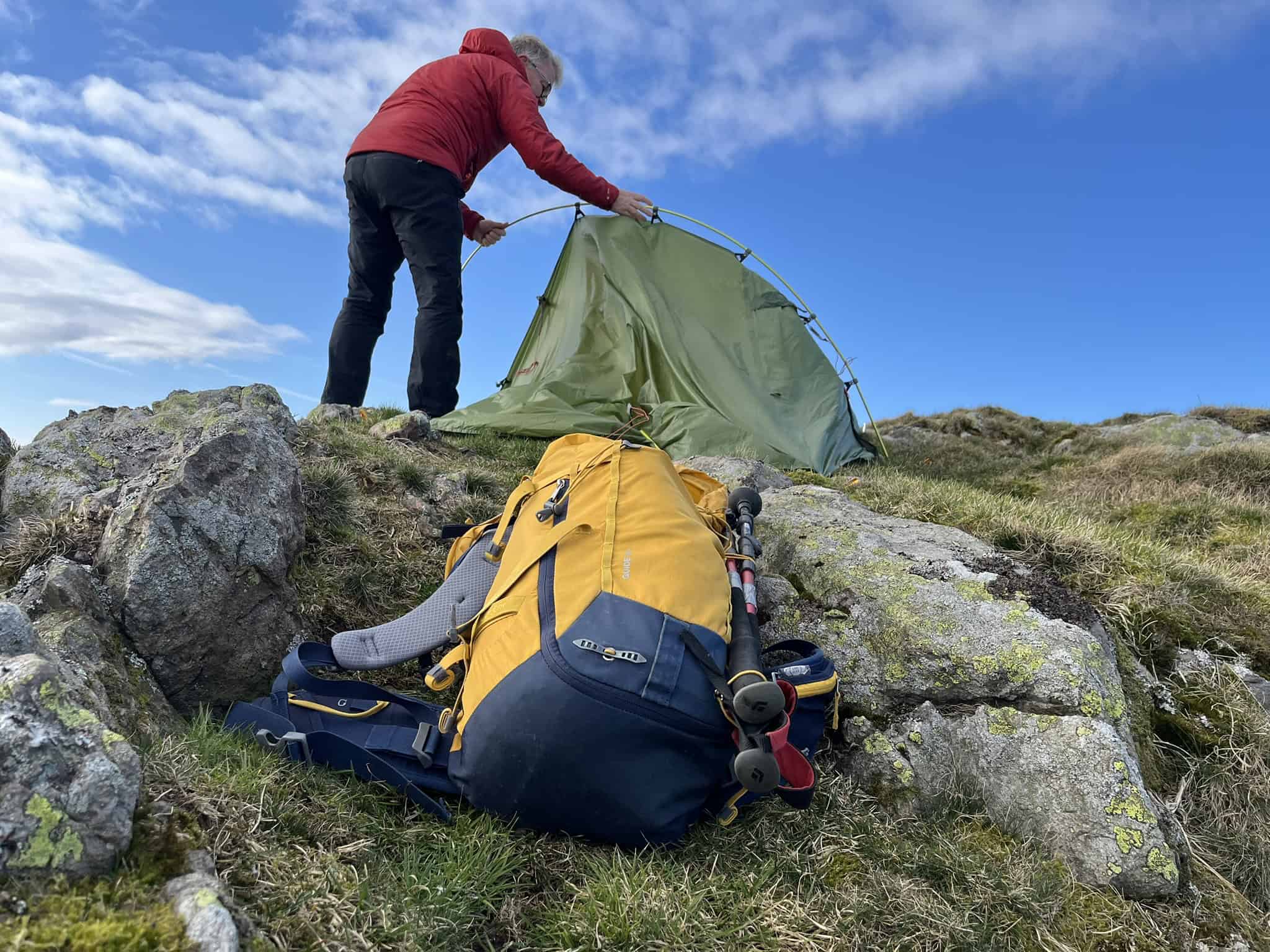
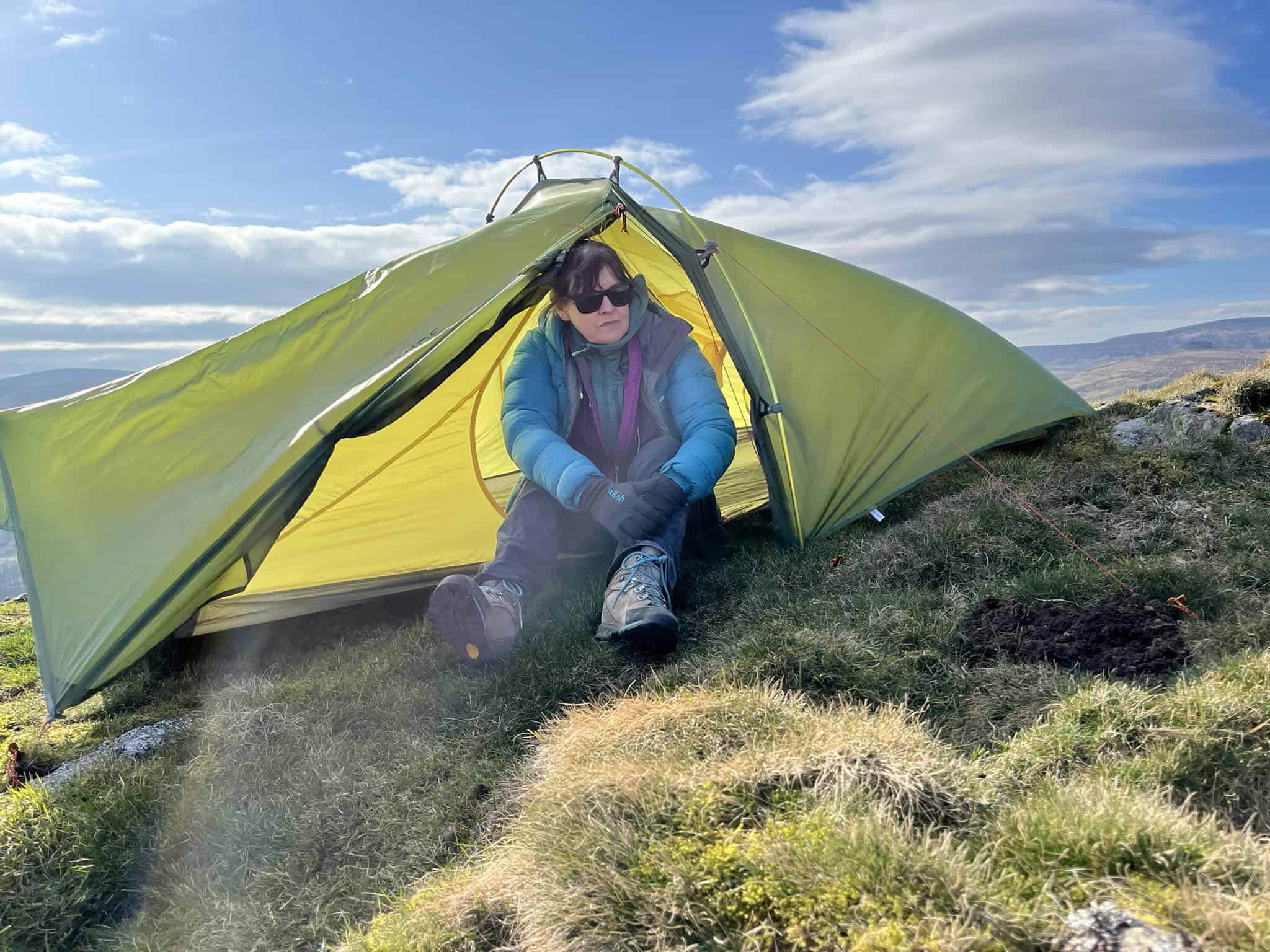
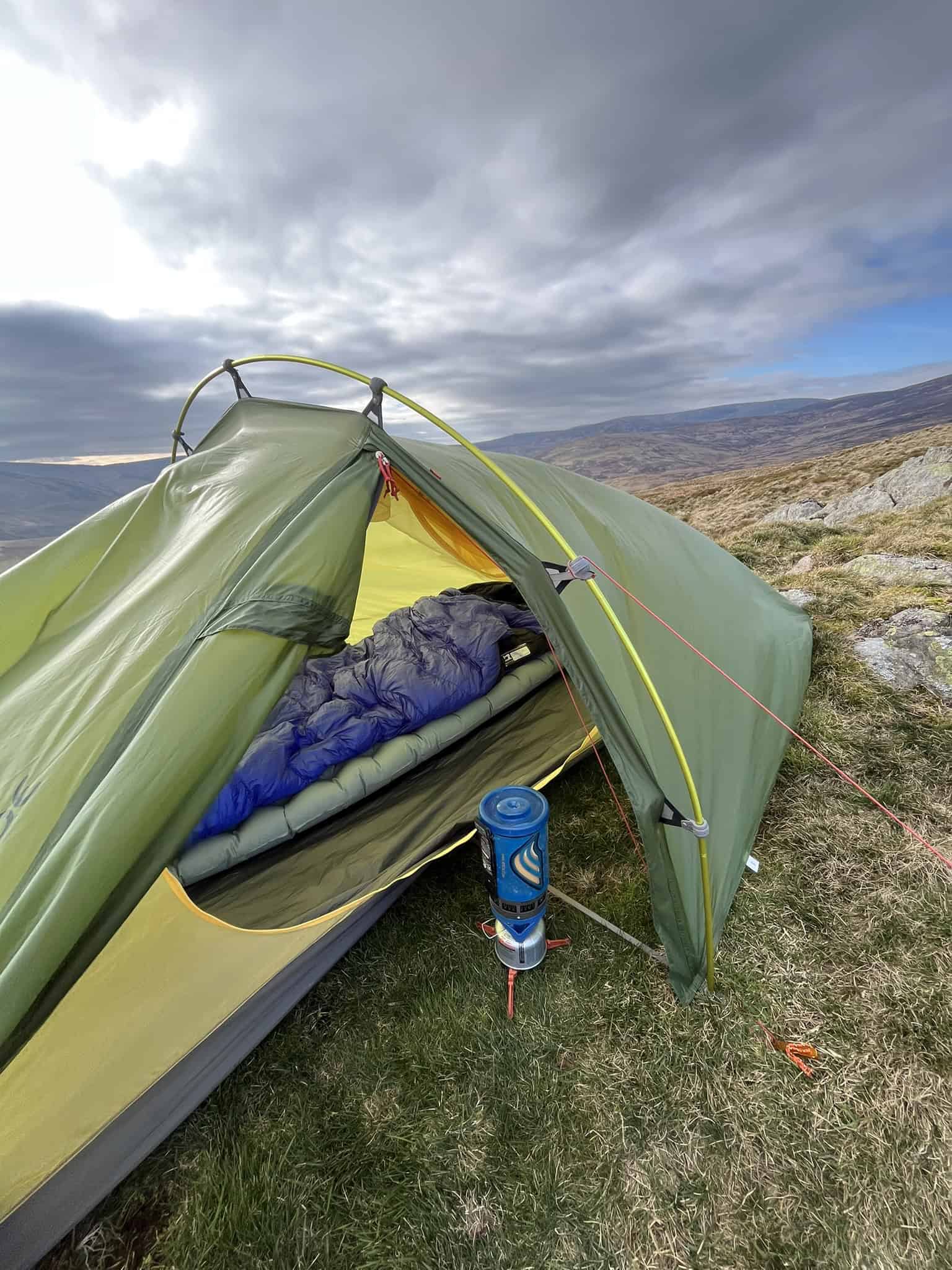
Wild camping in the UK with a lightweight mountain backpacking tent pitched high in the hills
A small, well-chosen mountain camp changes the pace of the whole journey.

Wild camping in the mountains sits somewhere between traditional camping and expedition travel. Instead of returning to the valley at the end of the day, you carry your shelter, sleeping system, spare clothing, food and water kit with you. That simple change alters how the hills feel. The landscape stops being somewhere you visit for a few hours and becomes somewhere you spend time properly.

For many walkers, mountain backpacking is one of the most rewarding ways to experience the UK uplands. It slows everything down. Distance matters less. Pace, weather, route choice and campcraft matter more. You begin to think carefully about where water will come from, how the wind will affect camp, what terrain will feel like with a loaded rucksack and where you want to wake up the following morning.

This is also why wild camping develops mountain skills so effectively. Navigation becomes more purposeful. Packing choices matter. Shelter choice matters. Judgement matters. A comfortable night in the hills is rarely the result of luck. It is usually the result of simple decisions made well and made early enough.

Backpacking travel through open upland terrain in the UK
Wild camping journey across remote mountain ground in the UK

If you want to go deeper into the practical side of overnight travel, the Peak Adventures Journal also includes guides on wild camping skills, mountain skills, equipment and kit and expedition planning.

What Wild Camping Means in the UK

Wild camping usually means lightweight, low-impact overnight camping away from formal campsites. In practice that means carrying a tent or shelter, sleeping bag, insulated mat, stove, food and spare clothing in a single rucksack and choosing a discreet place to stop for the night. The point is not to create a large camp. It is to travel simply through the landscape and leave very little sign behind.

The legal position varies across the UK. In Scotland, responsible access rights broadly support low-impact wild camping on unenclosed land. In England and Wales, the picture is more limited and more nuanced. In practical mountain terms, though, the same ethic applies everywhere: stay away from roads and buildings, pitch late, leave early, keep groups small and leave the ground exactly as you found it.

This distinction matters because good wild camping depends on discretion and restraint. Big obvious camps, noise, litter, fire scars and poor hygiene all damage fragile places and undermine the culture that backpackers rely on. The strongest camps are often the ones that feel calm, quiet and almost invisible.

Key point

Wild camping is not just sleeping outdoors. It is a way of travelling through the mountains that depends on simplicity, good judgement and very low impact.

How to Plan a Wild Camping Trip in the UK

Planning is one of the most important parts of mountain backpacking. Carrying overnight equipment changes pace and changes how terrain feels underfoot. A route that looks straightforward on the map can feel very different when you are carrying shelter, food and sleeping gear for the night. Distances often need to be shorter than you might choose for a normal day walk.

Good planning means allowing enough time to identify suitable campsites, fetch water, organise gear and still have margin left if conditions change. It also means thinking in alternatives. Where could you shorten the route if progress is slower than expected? Where could you descend if the weather deteriorates? Which areas are likely to offer sheltered camp options if the wind is stronger than forecast?

Forecasts should always be checked, but forecasts need interpreting rather than simply reading. Wind direction may matter as much as wind speed. Persistent rain can change the feel of an entire route. Low cloud can make open plateaux much more committing. The best plans are flexible plans.

Mountain backpacking terrain used for route planning in the UK hills
Remote upland route and camp options for a UK backpacking trip

If you are still building confidence, choose shorter routes in straightforward terrain and stable weather. A calm, successful overnight trip teaches more than an ambitious plan that becomes a struggle.

Essential Wild Camping Equipment

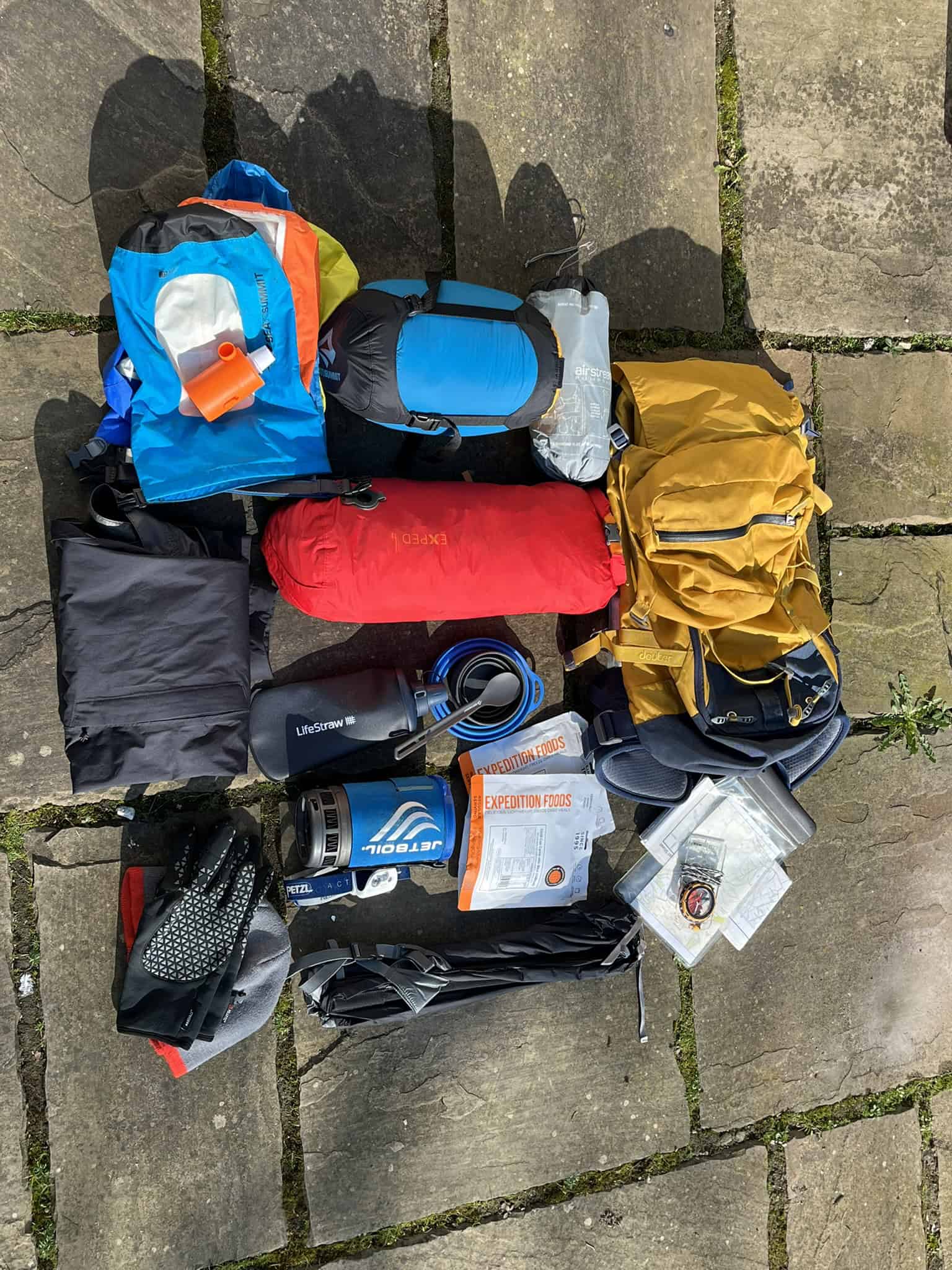
Wild camping equipment works best when viewed as a complete system rather than a list of separate purchases. Shelter, sleeping kit, stove, waterproofs, spare warm layers, food and navigation tools all interact. A lightweight tent is of limited value if the sleeping mat is too cold, the stove is unreliable or the rucksack does not carry the load comfortably.

Weight matters, but reliability matters more. Equipment that works consistently in poor weather is far more valuable than gear that saves a small amount of weight but struggles when conditions become uncomfortable. Backpackers often refine their systems over time, gradually removing unnecessary items and improving how the essentials work together.

Organising essential wild camping equipment beside a mountain tent
A good camp system depends on equipment that works together rather than on isolated gear choices.

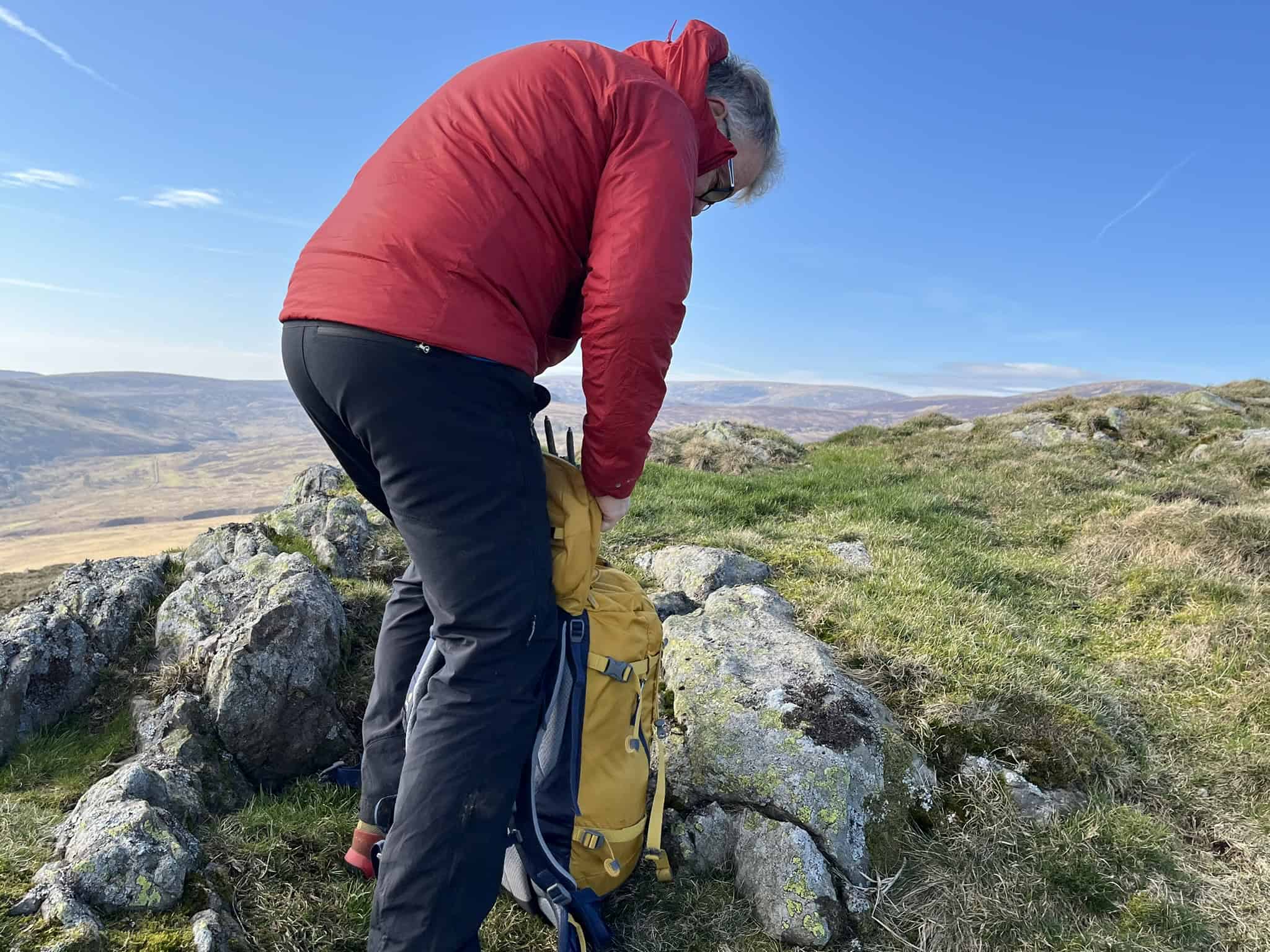
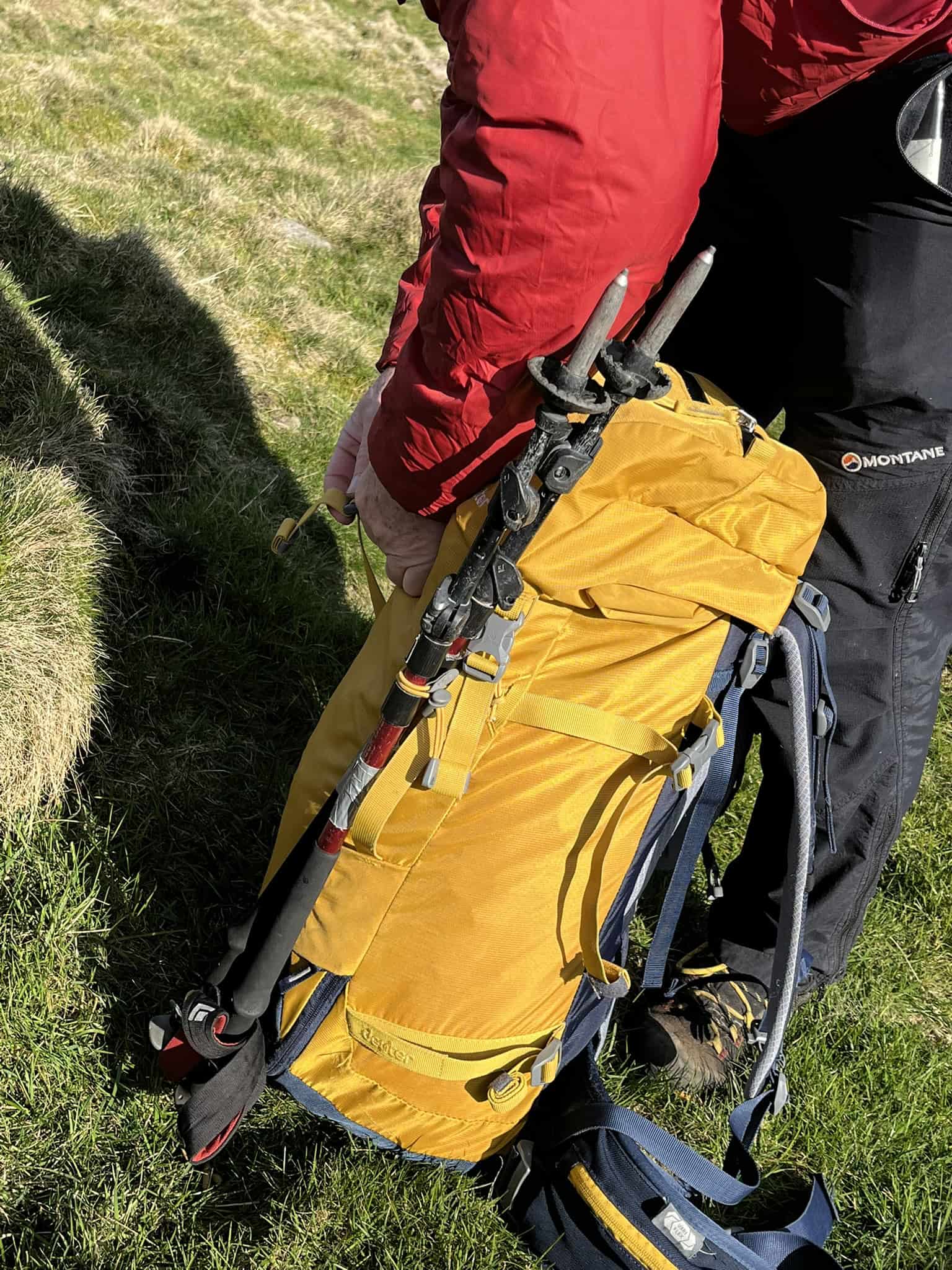
Packing matters too. Heavier items are usually best placed close to the spine and around the middle of the pack. Items likely to be needed during the day, such as waterproofs, insulation, food and navigation tools, should be easy to reach. Dry bags or a pack liner help protect sleeping kit and spare layers from rain.

Backpacking kit and shelter system prepared for a mountain overnight trip
Mountain backpacking equipment system laid out for a wild camping trip

For more detailed discussions around shelter systems, clothing choices and practical setups, see the Equipment & Kit category and the wider Wild Camping Skills section.

Finding Water While Wild Camping

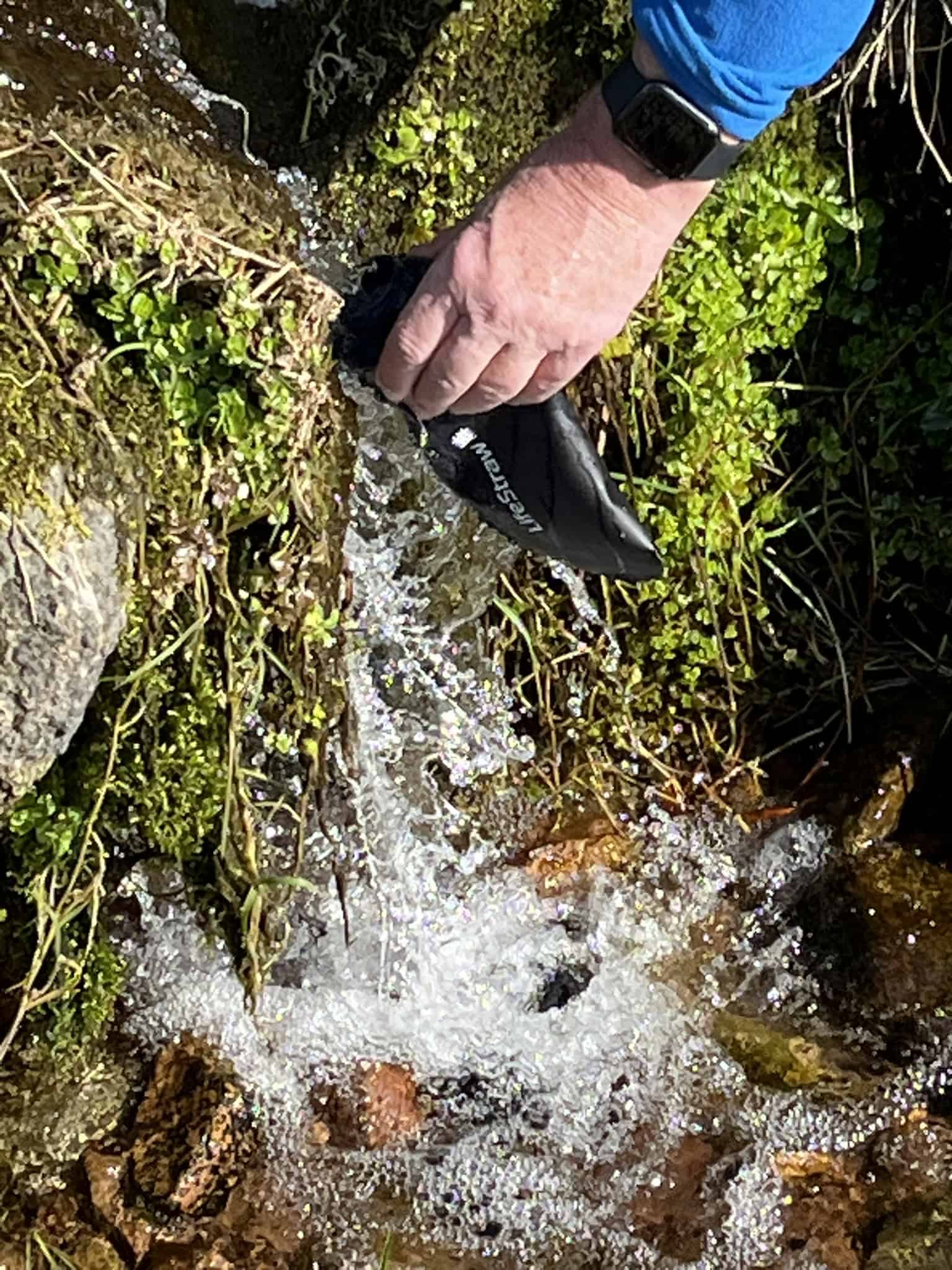
Water planning is one of the most practical parts of backpacking. In many upland areas of the UK, streams and springs provide regular opportunities to refill, but not every source is equally suitable. The best sources are usually clean, flowing and located high enough to reduce the influence of grazing and lower ground contamination.

Compact water filters make this much easier. They allow you to collect from suitable sources and reduce the need to carry excessive weight between refills. Even with a filter, though, judgement still matters. In dry weather, broad high ground may offer fewer reliable sources than expected, and poor campsite choice can create an unnecessary extra walk for water late in the day.

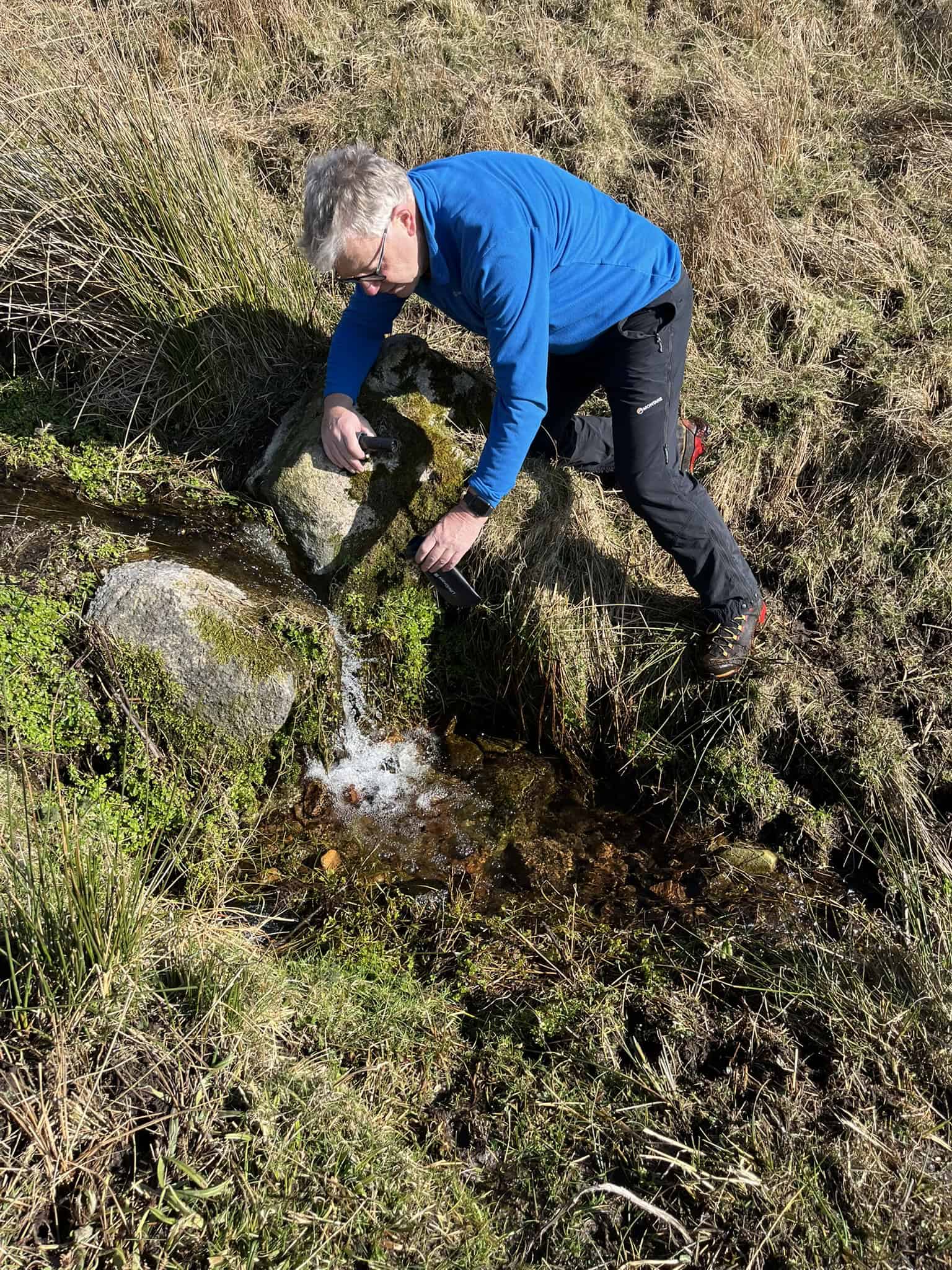
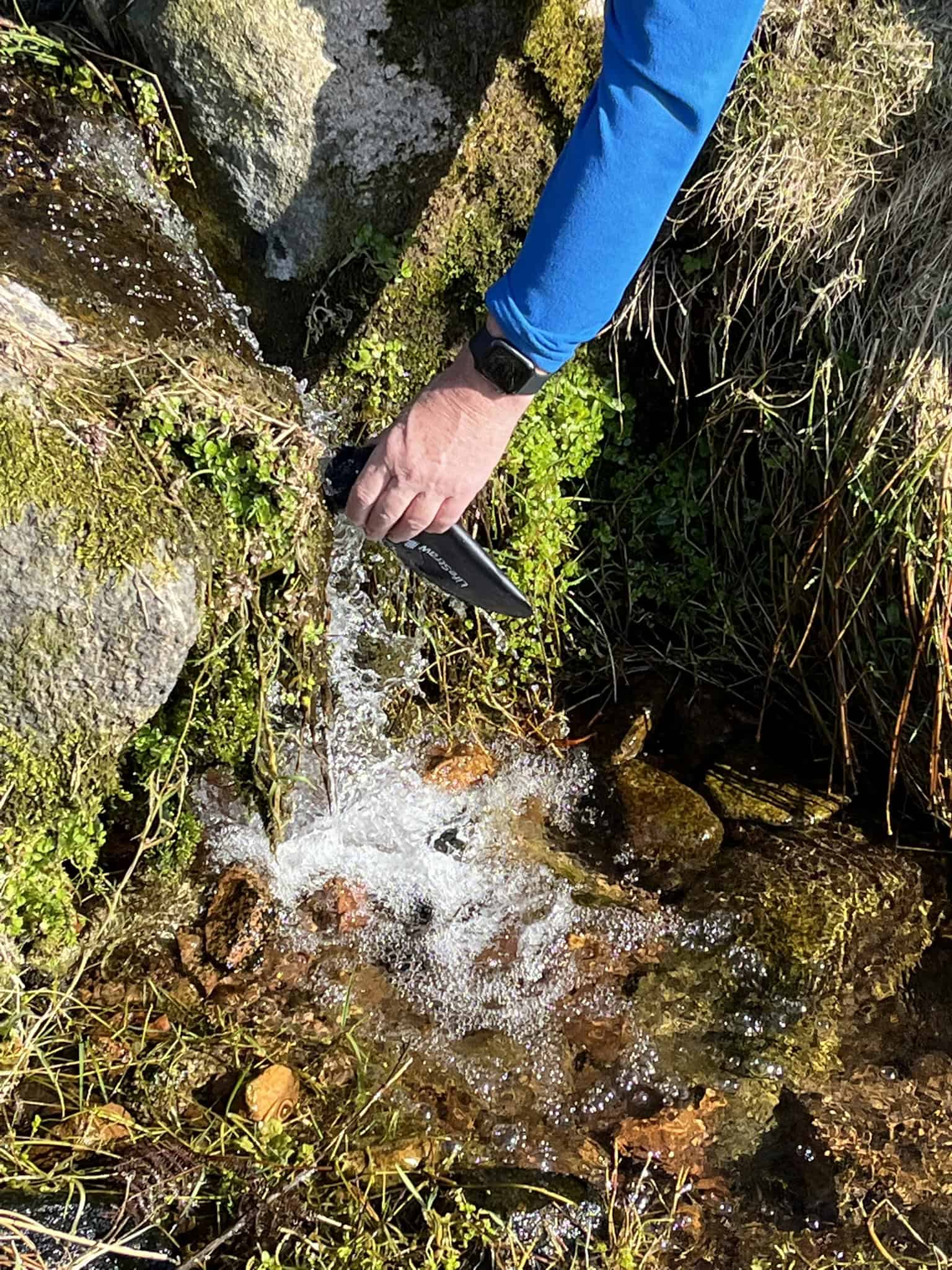
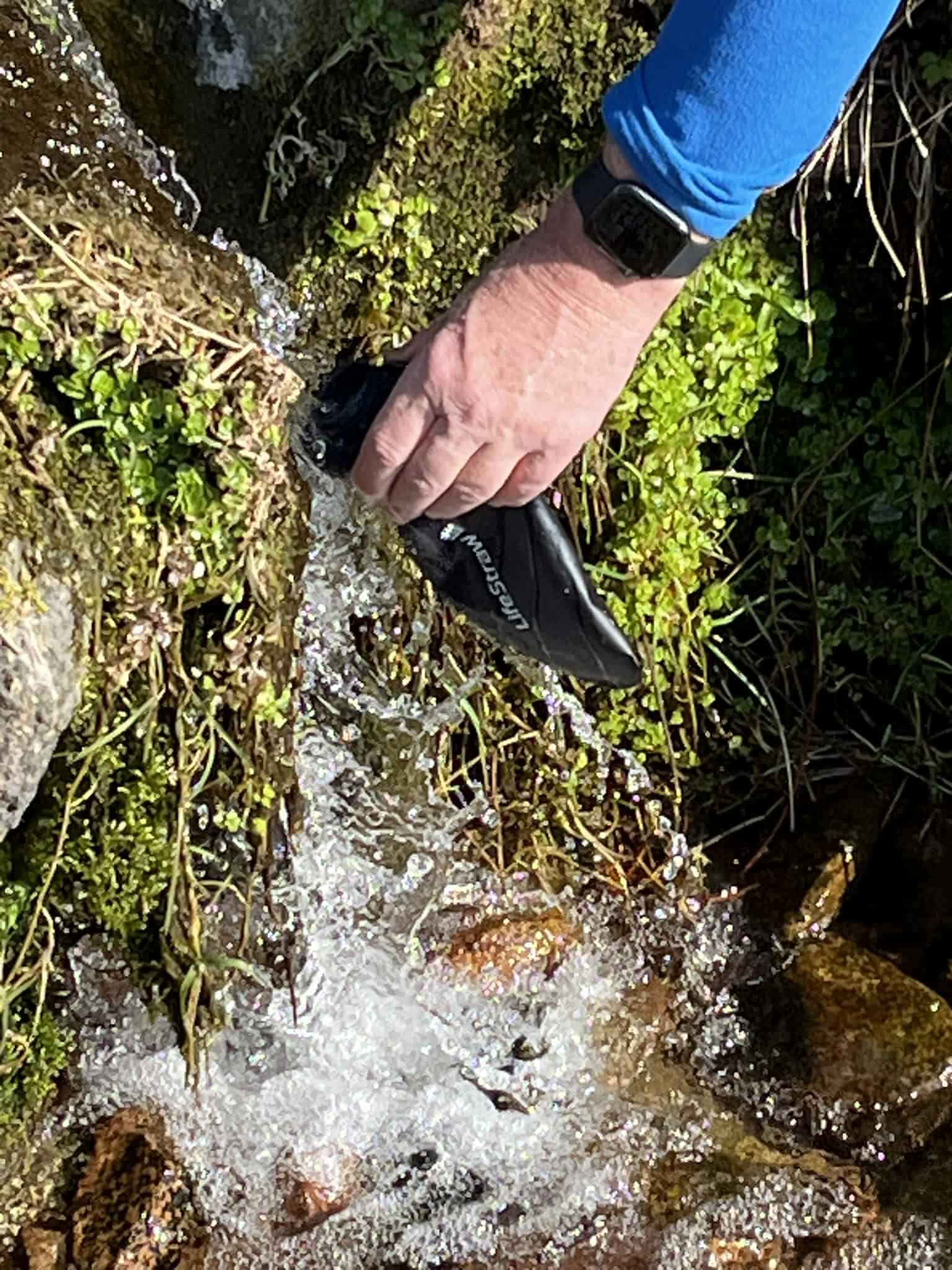
Collecting water from a mountain stream during a wild camping trip in the UK
Using a portable water filter in a mountain stream while backpacking

Good hydration systems do not need to be complicated. They simply need to be dependable enough that water stops become part of the natural rhythm of the day rather than a problem to solve late on.

Backpacking Food Systems and Camp Routine

Food on wild camping trips usually works best when it is simple. During the day, regular snacks and quick lunches help maintain a steady pace without long stops. In camp, most people want something warm, filling and straightforward to prepare. The aim is not culinary variety. It is a reliable, easy system that supports the walk and the evening routine.

Camp routine matters more than it first appears. A small stove, organised food, dry layers and a straightforward cooking system all help the evening feel calm rather than chaotic. Pitch the shelter, sort water, organise the sleep kit, cook, repack a few essentials for morning and then allow the pace of the day to slow down.

Backpacking food and simple camp routine during a mountain overnight trip
Simple systems make evenings in camp far more comfortable.

Good food systems and good camp systems have something in common: they work quietly in the background and leave you with more attention for the landscape itself.

How to Choose a Wild Camping Pitch

Choosing a pitch is one of the most important skills in wild camping. A good campsite is not simply flat ground with a good view. It needs to balance shelter, drainage, surface, exposure and discretion. Ground that is slightly less dramatic but more protected usually makes for a much better night.

Look for short durable grass, gentle ground and enough natural shelter from the prevailing wind. Avoid watercourses, obvious hollows that may collect water, ridge crests that are too exposed and places close to roads, buildings or heavily used paths. If the first site feels doubtful, keep looking. Most uncomfortable nights start with accepting a poor pitch because it is convenient.

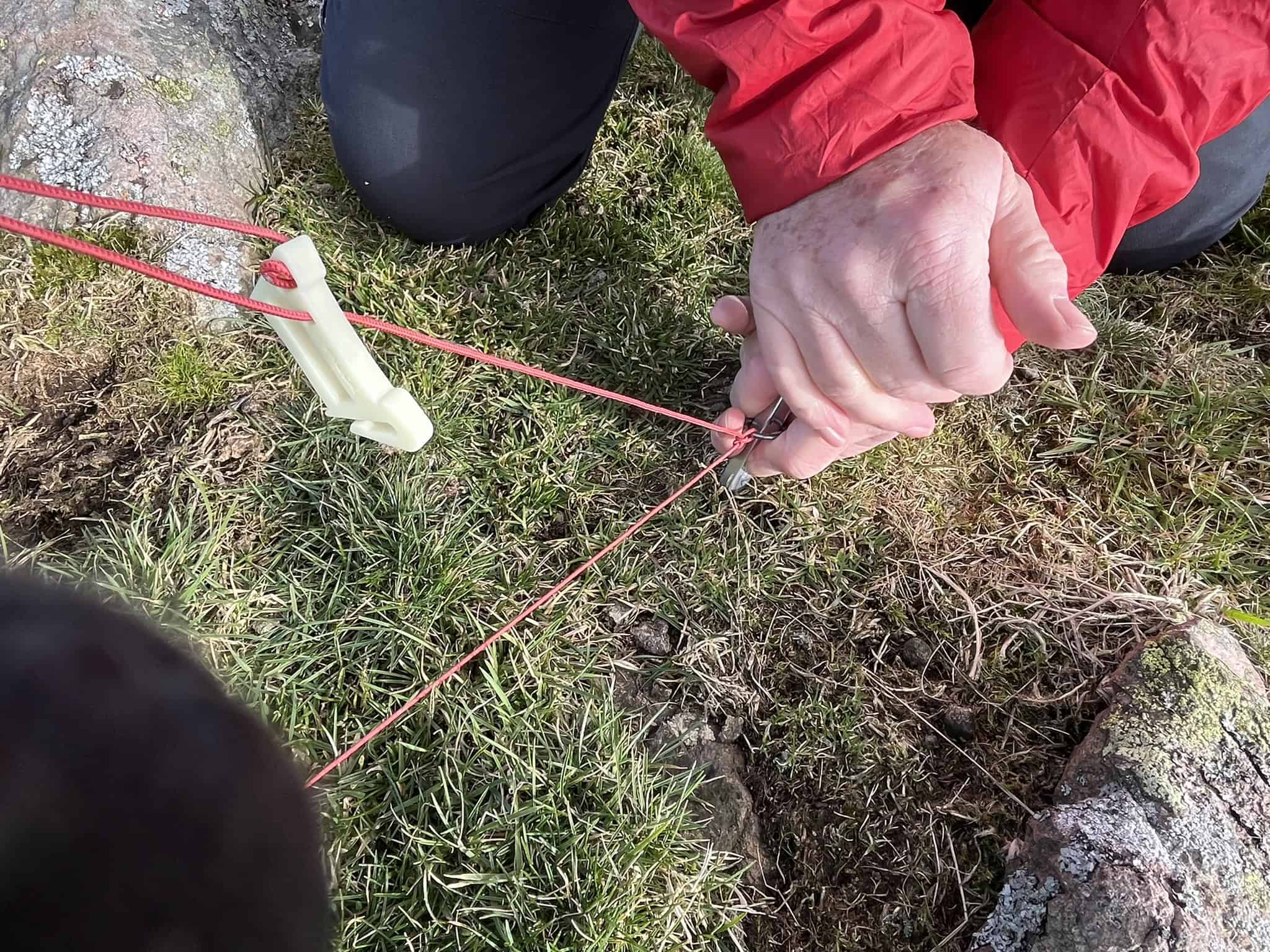
Securing a tent peg and guyline on short mountain grass for a wild camping pitch
Good pitches are usually quiet, sheltered and well judged rather than dramatic.

Arriving with enough daylight to assess more than one option is one of the simplest ways to improve both comfort and confidence.

Sleeping Systems for Mountain Backpacking

Sleep quality has a direct effect on the following day. Even in summer, upland temperatures can drop quickly overnight, and damp air or poor ground choice can make a camp feel colder than expected. A reliable sleep system usually combines three essentials: a well-pitched shelter, a mat with enough insulation from the ground and a sleeping bag suited to the conditions.

The mat is as important as the sleeping bag. Ground insulation makes a significant difference to warmth and comfort. Dry camp clothing helps too. So does a simple tent routine where the things you need are easy to reach and damp layers are kept under control.

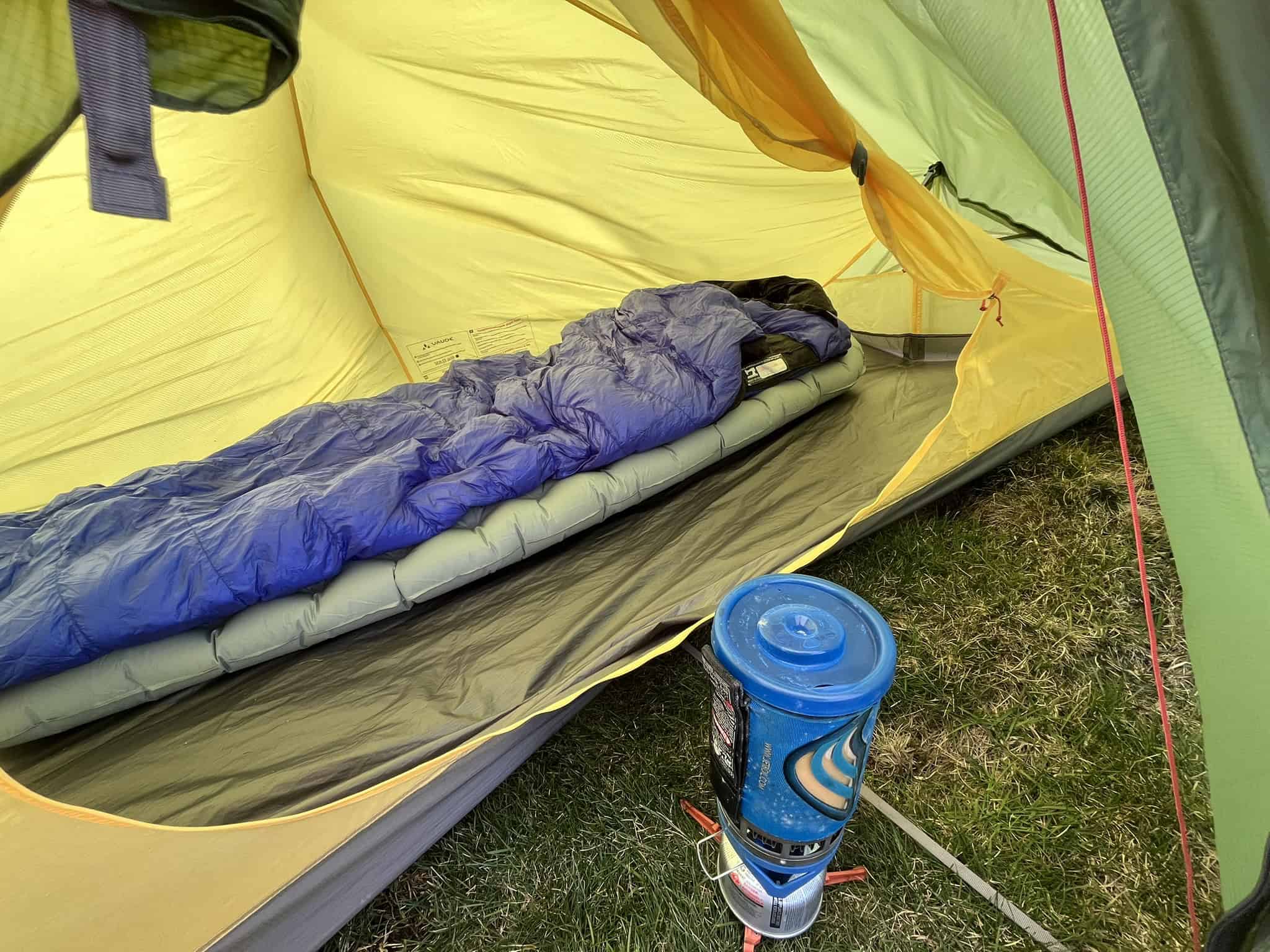
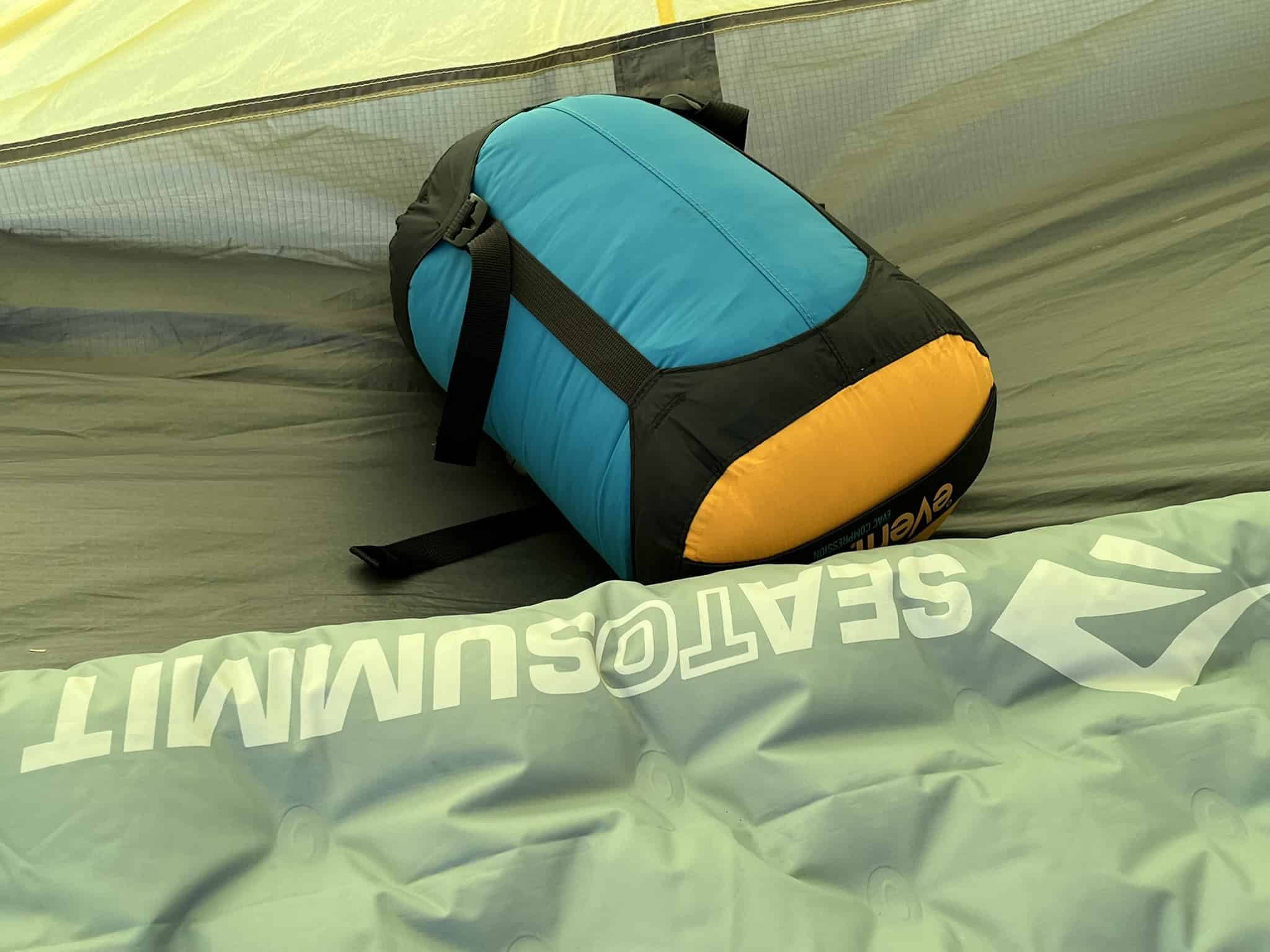
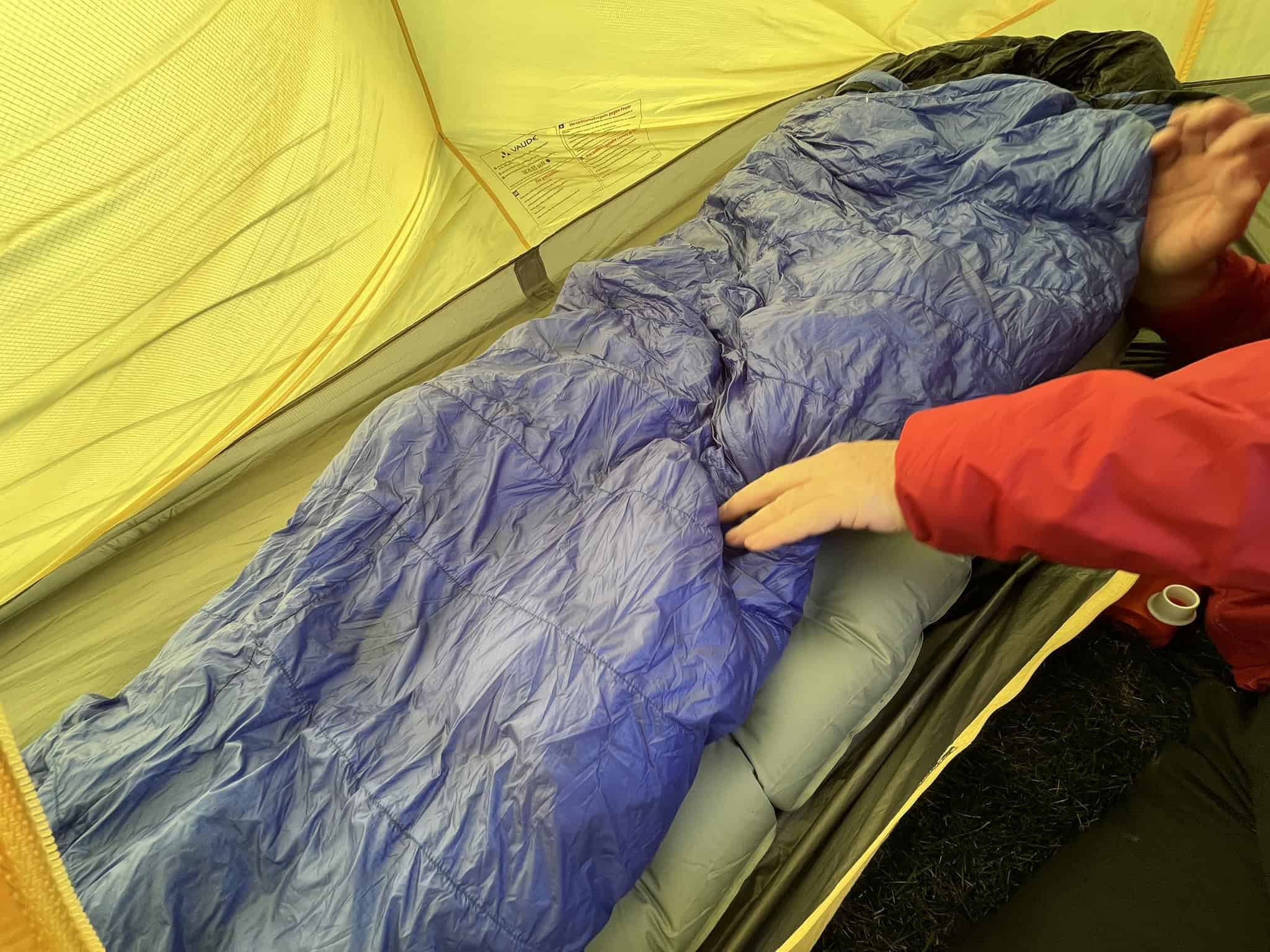
Sleeping bag and insulated sleeping mat inside a backpacking tent
Overnight sleep system arranged for a mountain backpacking trip

Most good nights in the hills come from small decisions made well: a decent pitch, dry layers, enough food, enough insulation and enough time left in the evening to get organised properly.

Weather, Judgement and Common Backpacking Mistakes

Wild camping is not mainly a gear challenge. It is a judgement challenge. Weather, terrain, visibility, pace, timing, fatigue and escape options all influence how sensible a plan really is. The right decision is often the one that keeps the trip manageable rather than ambitious.

New backpackers often make the same small group of mistakes. They carry too much. They plan too far. They leave campsite decisions too late. They overvalue dramatic camp locations and undervalue simple shelter. And they sometimes treat the forecast as fixed certainty rather than something to keep reassessing as the day develops.

Mountain weather and judgement during a UK backpacking trip
Mountain judgement usually matters more than any individual piece of equipment.
  • Carrying too much gear and turning the walk into a load-carrying exercise.
  • Leaving camp choice too late and accepting poor ground because the light is fading.
  • Over-planning mileage and under-planning margin for weather or route changes.
  • Choosing exposure and scenery over shelter and a genuinely restful night.

Leave No Trace Wild Camping

Responsible behaviour protects both the environment and the future of wild camping. The landscapes that make backpacking so rewarding are often fragile and slow to recover from careless impact. A poor campsite choice, litter, fire damage or bad hygiene can leave marks that last much longer than the night itself.

The principles are straightforward. Camp on durable ground. Stay away from roads, buildings and busy footpaths. Keep groups small. Avoid fires in upland settings. Pack out litter and food waste. Manage human waste responsibly and away from water sources. Leave the site looking as though nobody has been there.

Low impact mountain camping in a remote UK landscape
Responsible wild camping in quiet upland terrain
Remote mountain wild camping with minimal environmental impact

The best camps are often the ones that leave almost no sign behind. That is what keeps wild camping both practical and defensible in remote places.

Frequently Asked Questions About Wild Camping in the UK

Is wild camping legal in the UK?

Wild camping is broadly supported in Scotland when it is done responsibly under access legislation. In England and Wales the legal picture is more restricted, so discretion, low impact and good judgement are especially important.

What equipment do you need for wild camping?

Most backpacking systems include a lightweight shelter, sleeping bag, insulated mat, stove, food, waterproof clothing, navigation tools and a rucksack large enough to carry everything comfortably.

How far should you walk on a backpacking trip?

That depends on terrain, conditions and experience. Many trips feel better when the distance is modest enough to allow time for navigation, water collection, campsite choice and a relaxed evening routine.

Where are the best places to wild camp in the UK?

Remote upland landscapes such as the Scottish Highlands, Cairngorms, Lake District and parts of Eryri / Snowdonia are popular because they offer suitable terrain, space and strong mountain travel opportunities.

Final Thoughts on Wild Camping in the UK

Wild camping in the UK is at its best when it stays simple. A sound plan, a dependable camp system, a well-chosen pitch and calm mountain judgement usually matter more than distance, drama or complexity. That is true whether you are preparing for a first overnight or refining your approach after many trips.

What makes mountain backpacking so compelling is that it strips travel back to essentials. You carry what you need, move more thoughtfully and pay much closer attention to weather, terrain and your own decisions. The result is often a deeper and quieter experience of the hills than day walking alone can offer.

Wild camping in the UK offers one of the most immersive ways to explore the mountains and upland landscapes of Britain. With careful planning, reliable equipment and responsible behaviour it becomes a sustainable way to travel through some of the country’s most remarkable environments.

Mountain backpacking image from a wild camping trip in the UK Wild camping field image from a UK mountain overnight trip Backpacking and camp preparation image in upland terrain Mountain backpacking scene from a UK wild camping journey Open mountain ground during a backpacking trip in the UK Wild camping detail image from a mountain overnight trip Mountain camp detail from a UK backpacking trip Backpacking and mountain travel image from a UK overnight walk Upland landscape image from a wild camping journey Quiet mountain camp image from a UK wild camping trip Remote backpacking image from a UK mountain wild camp Wild camping and hill travel image from the UK uplands Mountain backpacking and camp life image from a UK overnight trip

Explore more

Continue reading more practical articles from the Peak Adventures Journal.

Mountain Skills

The Art of Hill Fitness

Preparing your body for multi-day mountain journeys requires durability, not speed. Hill fitness is about building the strength and endurance to move comfortably through the landscape day after day.

Peak Adventures Journal Mountain Skills Expedition Planning

At Peak Adventures we rarely talk about speed or intense workouts when preparing for mountain trips. What matters far more is durability: the ability to walk steadily for many kilometres, carry a pack, establish a camp and wake up ready to do it again the following day.

Multi-day journeys across the Highlands or the Lake District demand consistent movement rather than bursts of effort. Building this capacity takes time, but the training itself is simple. It is based on time spent walking, gradual increases in pack weight and learning how your body responds to varied terrain.

The aim is not athletic performance but steady resilience. When your fitness is built around the realities of mountain travel, the days feel smoother and the experience of the landscape becomes far more enjoyable.

Time on feet: building the aerobic base

The foundation of mountain fitness is simple: time spent walking. Long days in the hills rely on efficient aerobic movement rather than high-intensity effort. Training at a steady pace allows your body to develop endurance without excessive fatigue.

This approach is often referred to as Zone 2 training, where you move at a pace that still allows comfortable conversation. Over time this improves the body’s ability to use energy efficiently and sustain effort for many hours.

Practical training approach

  • Aim for several hours of walking each week on varied terrain.
  • Keep the pace comfortable and sustainable.
  • Gradually extend the length of your walks.
  • Consistency over many weeks matters far more than intensity.

Progressive pack loading

Carrying weight changes how your body moves. Starting a multi-day expedition with a full pack when you have only trained with a light day bag is a common mistake. Instead, increase pack weight gradually so that muscles, joints and posture adapt naturally.

Training walks are an ideal opportunity to refine both equipment and comfort. They allow you to understand how your pack sits, how weight affects your pace and how your body responds over several hours of movement.

A gradual progression

  • Begin with a normal day pack of around 3–5 kg.
  • Add small increments of weight over several weeks.
  • Use water containers to increase weight safely.
  • Work towards roughly 80% of your expected expedition load.

The descent: protecting your knees

Many walkers focus their training on climbing. However, steep descents are often where fatigue and injury occur. Downhill movement places greater stress on joints and tendons, particularly during long mountain days.

Training for descent improves stability, balance and confidence on uneven ground. Small adjustments in technique and strength can significantly reduce strain on the knees and lower legs.

Useful habits

  • Eccentric strength: Controlled downhill walking builds tendon strength.
  • Balance and proprioception: Uneven terrain improves stability and reaction time.
  • Trekking poles: Proper pole use can reduce impact on steep descents.

Confidence through preparation

Physical preparation is not about becoming an athlete. It is about building the confidence to move comfortably through mountain terrain with a pack on your back.

When your training reflects the realities of the hills, longer journeys begin to feel natural. Steady pacing, efficient movement and consistent habits are what allow you to enjoy the experience of remote landscapes rather than simply endure them.

Related course

Mountain Skills Courses

Build the practical skills and confidence needed for longer journeys in the hills, including navigation, movement and preparation for multi-day trips.

View Mountain Skills Courses

Explore more

Continue reading practical guidance from the Peak Adventures Journal.

Expedition Planning

Leave No Trace: The Ethics of Wild Camping

In Scotland we have the remarkable privilege of the Right to Roam. With that freedom comes a responsibility to move through wild places with care and leave them exactly as we found them.

Peak Adventures Journal Wild Camping Skills Expedition Planning

Wild camping in places such as the Isle of Rum or the remote glens of Knoydart is one of the most rewarding experiences in the Scottish Highlands. These landscapes feel vast and untouched, yet they remain surprisingly fragile.

A poorly chosen campsite or careless habits can leave visible damage for years. For this reason every Peak Adventures expedition follows the principles often described as Leave No Trace. The aim is simple: when we leave a place, there should be no sign that we were ever there.

Practising these habits is not about restriction. It is about ensuring that the sense of wildness we experience today remains intact for the next walker who passes through the glen.

Managing waste responsibly

Waste management is rarely discussed openly, yet it is one of the most important aspects of responsible wild camping. On longer journeys through remote terrain there are no facilities, so careful planning becomes essential.

The usual practice is to bury human waste in a small hole at least 15 cm deep and well away from water sources, paths and campsites. A lightweight trowel makes this process simple and ensures that waste decomposes naturally in the soil.

Peak Adventures approach

On our expeditions all toilet paper and hygiene products are packed out and carried until they can be disposed of properly. It may feel unusual at first, but it is the most reliable way to protect sensitive environments.

Stoves instead of fires

Campfires often feel like part of the romantic image of wild camping, but in many upland environments they cause lasting damage. Fire scars remain visible for decades and gathering fuel can strip fragile vegetation from an already sparse landscape.

For this reason we rely on lightweight gas stoves for all cooking. Modern stoves are efficient, quick to use and leave no mark on the ground once the camp is packed away.

Choosing durable ground

The location of a tent can have a surprisingly large impact on the landscape. Durable surfaces such as dry grass, gravel or firm ground can tolerate temporary use, whereas delicate moss, bog plants or soft peat can be easily damaged.

Careful site selection also helps avoid unnecessary disturbance. We avoid digging trenches, altering the ground or creating permanent marks around a campsite.

Respecting the quiet

Wild places are defined as much by sound as by scenery. Part of responsible travel is recognising that other people may have come to the mountains for the same sense of quiet.

Keeping groups small helps reduce both visual and noise impact. It also creates a calmer experience where walkers can fully appreciate the remote character of places such as Rum or Knoydart.

The invisible hiker

The idea behind Leave No Trace is simple: travel through the landscape in a way that leaves it unchanged. A well-managed camp can disappear completely within minutes of packing away.

By following these habits we help preserve the wild character of the Highlands. Every responsible journey ensures that future visitors can experience the same sense of discovery.

Related expeditions

Wild Camping Expeditions

Join a small guided expedition and experience the remote landscapes of Rum and Knoydart while learning practical, low-impact wild camping skills.

Browse Expeditions

Explore more

Continue reading practical guidance from the Peak Adventures Journal.

Skills & Safety

Beyond the Blue Dot: Why Navigation Skills Still Matter

GPS is a useful tool, but in the remote glens of Knoydart and the mist-heavy Rùm Cuillin, map and compass skills remain the foundation of safe mountain travel.

Peak Adventures Journal Mountain Skills Skills & Safety

We live in the era of the “blue dot”. With a smartphone in your pocket, it is easy to feel self-sufficient. But in the Scottish Highlands, digital tools have a habit of failing exactly when you need them most, whether from cold batteries, wet weather, damaged screens or loss of signal in a deep glen.

On a Peak Adventures trip, your route is led by an experienced mountain leader. Even so, understanding the how and where of your journey makes the day far more rewarding. Navigation is not just about getting from A to B. It helps you read the ground, make sense of the landscape and travel with more confidence in poor visibility or complex terrain.

Good navigation also sharpens decision-making. It encourages a clearer understanding of terrain, distance, escape options and the small details that often matter most when conditions deteriorate.

The analogue advantage

A paper map never runs out of battery. When you are crossing pathless terrain on the Isle of Rum, a map gives you the bigger picture that a small screen cannot. It shows the cliffs to avoid, the river crossings ahead and the most sensible line through a complicated mountain ridge or plateau.

Digital tools can be helpful, particularly for confirmation or backup, but they work best when used alongside sound judgement rather than instead of it. A map and compass ask more of you, but they also tell you more.

A reliable starting point

A dependable base setup is a quality baseplate compass paired with the correct OS map for your route. In poor visibility, precise map reading, careful bearings and disciplined pacing matter far more than convenience.

The three pillars of navigation

Good navigation is not about memorising symbols. It comes from a few core habits, repeated consistently and applied calmly in the field.

These habits build confidence because they help you keep track of your position before uncertainty begins to grow. They are simple in principle, but powerful when practised well.

Practical considerations

  • Map-to-ground orientation: Keep the map aligned with the direction of travel so the landscape and the page relate clearly to one another.
  • Timing and pacing: Knowing your pace across different terrain helps you judge distance and position when visibility drops.
  • Using handrails and attack points: Obvious features such as streams, ridgelines, paths or loch shores can guide safe progress and reduce uncertainty.
  • Consistent checking: Small regular checks are usually more effective than waiting until you feel unsure.

Why we teach it

Our Mountain Skills articles and courses are not only for highly experienced walkers. They are for anyone who wants to move beyond simply following a screen and start making better decisions in the hills.

Whether you are preparing for a remote expedition in Knoydart or want more confidence on local mountain days, solid navigation changes the way you experience the landscape. It turns the map from a backup into an active tool for understanding where you are, what lies ahead and how best to move through it.

Worth remembering

Confidence in the hills is rarely about speed or technology. More often, it comes from calm habits, reliable tools and the ability to read the ground for yourself.

Confidence is a skill

The difference between a stressful day and a successful one often comes down to confidence in your tools and your judgement. Next time you are out, put the phone away for a while. Take a bearing. Read the contours. Notice how the shape of the hill matches the map.

The mountains become far more interesting when you are the one doing the reading. That deeper engagement with the landscape is part of what makes mountain travel so rewarding.

Related course

Mountain Skills Courses

Join us for a mountain skills course and learn how to read the ground, plan routes and navigate with confidence in the hills.

View Mountain Skills Courses

Explore more

Continue reading more practical articles from the Peak Adventures Journal.

Expedition Planning

Mountain Fit: How to Prepare for Your First Multi-Day Expedition

Moving beyond gym fitness means preparing for rough, pathless ground, steady effort and the realities of carrying a multi-day pack through places such as Rum and Knoydart.

Peak Adventures Journal Expedition Planning Mountain Skills

One of the most common questions before a first expedition is simple: am I fit enough? It is a sensible question, particularly for solo walkers stepping into longer, more committing journeys in the Highlands.

Our expeditions on the Isle of Rum and through Knoydart are designed for fit hill walkers, but they are sustained mountain journeys rather than short day walks. You do not need to be exceptionally fast, but you do need the ability to move steadily across rough ground while carrying everything you need for several days.

Real mountain fitness is less about gym performance and more about resilience, pacing and comfort under load. The better prepared you are, the more energy you have to enjoy the journey itself.

A realistic pack weight

On a well-prepared expedition, a total pack weight of around 12 kg to 15 kg is usually a sensible target. That includes the essentials such as shelter, sleep system, clothing, food and water.

Once pack weight climbs much beyond that, walking becomes noticeably less efficient and the enjoyment of the trip can reduce quickly. Weight affects not only uphill effort, but also balance, recovery and how comfortably you move over rough ground.

A useful habit

Weigh your pack before leaving home. If it is over 15 kg, review what you are carrying and remove anything that does not directly support safety, comfort or efficiency.

Train for the terrain, not just the distance

Rum and Knoydart are not smooth trail walks. Expect rough paths, boggy sections, steep ground and periods of trackless movement. Fitness built only on flat roads or gym machines often does not translate particularly well to this kind of terrain.

The most useful preparation is walking outdoors on mixed ground with gradually increasing load. This develops balance, ankle strength, hill efficiency and the ability to keep moving well when the terrain becomes awkward.

Practical preparation

  • Progressive loading: Start with a lighter pack and build gradually towards expedition weight over several weeks.
  • Off-trail movement: Walk on uneven grass, heather, rocky paths and coastal terrain where possible.
  • Longer days out: Focus on steady, sustained walks rather than short hard sessions.
  • Consistency: Repeated exposure to hill terrain matters more than occasional heroic efforts.

Different journeys, different demands

Although both journeys require the same broad foundation of fitness, each has its own rhythm and character.

On the Isle of Rum, the challenge often comes from the commitment of the terrain and the sustained nature of the mountain travel, especially around the rougher, more complex ground of the Rùm Cuillin. In Knoydart, the point-to-point nature of the expedition adds another layer, as moving camp daily makes recovery and efficient routines just as important as strength.

Worth remembering

Good expedition fitness is not just about getting through one hard day. It is about repeating solid days of movement and still having enough left to recover well and enjoy the next stage.

Preparation creates enjoyment

Good preparation allows you to lift your head and appreciate the landscape rather than simply concentrate on getting through the day. When your pack is sensible, your pacing is steady and your body is used to uneven ground, the experience becomes much more rewarding.

If you are uncertain about your fitness or the weight you expect to carry, it is worth addressing that before the expedition begins. Small adjustments in training and kit choice often make a significant difference.

Related guide

The Ultimate Scotland Expedition Kit List

Check what you need, what you can leave behind and which key items are available to hire before your next multi-day journey.

View the Kit List

Explore more

Continue reading practical guidance from the Peak Adventures Journal.

Wild Camping Skills

The Solo Hiker’s Guide to First-Time Wild Camping

For many solo hikers, wild camping begins with a search for silence and independence. The real question is not whether you can go alone, but whether you are prepared to do it safely and well.

Peak Adventures Journal Wild Camping Skills Mountain Skills

The desire to wild camp often starts with a search for quiet. For many solo hikers, however, the idea of a first night out is held back by a single concern: is it safe to go alone?

The answer depends less on confidence and more on preparation. Many of the people who join our expeditions began in exactly the same place. They wanted to explore places such as the Isle of Rum or Knoydart, but did not have a partner with the same goals or experience.

Solo wild camping is not simply about being alone. At its best, it is about moving at your own pace, making good decisions and building the quiet confidence that comes from being well prepared.

The safety-first mindset

Safe solo travel usually comes down to three things: planning, communication and competence. Before heading out, you should understand the forecast, know how to navigate in poor visibility and feel capable of dealing with small problems when you are far from the road end.

None of this needs to feel daunting, but it does need to be taken seriously. Competence in the hills is built through practice, repetition and a gradual increase in commitment.

Why join a group first?

Joining an expert-led group is not a shortcut. It is often the most sensible way to build experience. It allows you to practise campcraft, navigation and routines in a supportive environment before setting out alone.

Gear for one: lightweight and reliable

Solo camping means carrying everything yourself. There is no opportunity to split the weight of a stove, shelter or sleep system with a partner, so equipment choice matters more.

The goal is not to own the lightest equipment available, but to use kit that is reliable, weatherworthy and appropriate for the trip. A well-chosen solo system makes moving through the hills more efficient and camp life noticeably easier.

What matters most

  • A shelter you can pitch confidently in poor weather.
  • A sleep system suited to the season and expected conditions.
  • A simple, dependable stove setup.
  • Pack weight that remains manageable over a full day in the hills.

Three good habits for a first solo night

First solo trips should be simple, controlled and deliberately modest. The aim is to build confidence, not to test your limits on the first attempt.

Practical starting points

  • Leave a route card: Tell a trusted contact where you are going and when you expect to return.
  • Use real navigation skills: Do not rely solely on a phone. A map and compass should be part of your normal system.
  • Start small: Choose an accessible first trip rather than heading straight into a remote area.

Confidence grows with experience

A successful first solo camp is rarely about dramatic terrain or long distances. More often, it is about quiet competence: choosing a good site, managing your kit well and waking up knowing you can do it again.

Many solo hikers find that building experience through guided trips is the most comfortable first step. It creates a safe environment to refine your routines, ask questions and understand what works before committing to a truly solo journey.

Related course

Guided Wild Camping Expeditions

Join a small, welcoming group to build experience, refine your campcraft and gain confidence before planning bigger solo journeys.

View Expeditions

Explore more

Continue reading practical guidance from the Peak Adventures Journal.